How to Turn One Product Page Into a Complete E-commerce Campaign Pack
Your product page is not a campaign — it's the raw material. The workflow to turn one PDP into angles, hooks, copy, images, and video ready to test across Meta, TikTok, Instagram, and email.
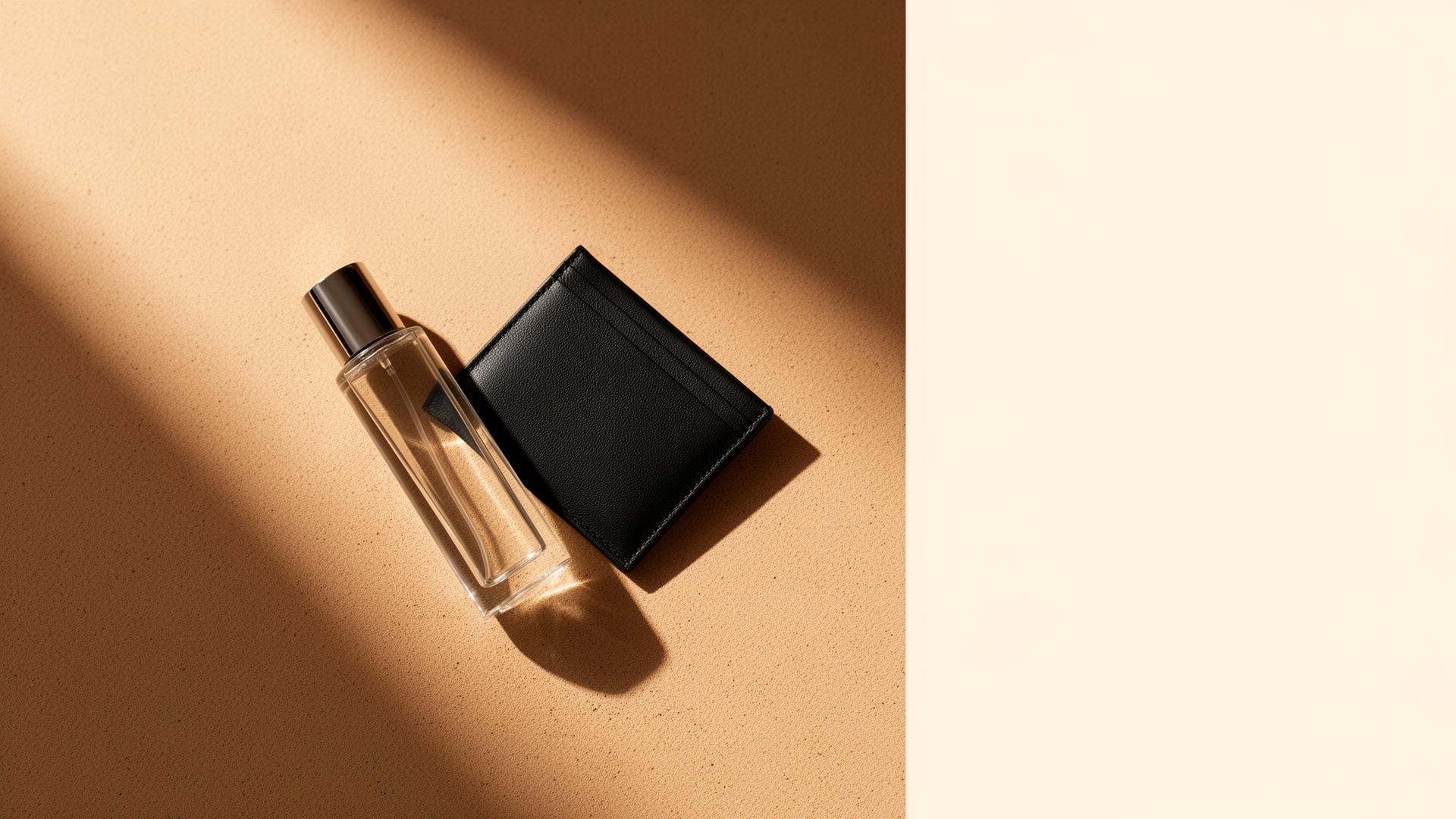
Your product page is not a campaign.
It is the raw material.
Most e-commerce teams treat the product page as the starting point and the finish line. They upload product images, write a description, add the price, publish the page, and then expect that same information to magically become Meta ads, TikTok videos, Instagram captions, email copy, campaign visuals, and launch videos.
That is where product launches start to break.
A product page explains what the product is.
A campaign explains why someone should care now.
That difference matters.
A product page can be clear and still be weak for marketing. It can list the features, show the product, include the variants, display the price, and still fail to create desire.
Not because the product is bad.
Because the campaign angle is missing.
This is why the next e-commerce workflow should not start from a blank Google Doc, a random brainstorming session, or another disconnected AI image tool.
It should start from the product URL.
One product page should become a complete e-commerce campaign pack: campaign angles, ad concepts, TikTok hooks, social captions, product copy, final campaign images, and video assets ready to test across Meta, TikTok, Instagram, email, and product pages.
That is the workflow we are building with Kampana.
Direct answer
An e-commerce campaign pack is a collection of campaign-ready assets created from a product page. It can include campaign angles, ad concepts, TikTok hooks, social captions, product copy, final campaign images, video assets, and launch recommendations. The goal is to turn a product page into assets that can be tested across Meta, TikTok, Instagram, email, and product pages.
The problem: product pages describe, campaigns sell
Most e-commerce product pages are built for catalog logic.
They answer questions like:
- What is the product?
- What does it include?
- What colors, sizes, or variants are available?
- What does it cost?
- What are the materials or ingredients?
- How do I buy it?
That is useful.
But it is not enough for campaign creation.
Campaigns need different questions:
- What problem does this product solve?
- What desire does it create?
- What moment does it fit into?
- What makes someone stop scrolling?
- What image should we show first?
- What video should we test?
- What hook makes the product interesting?
- Why should someone care today, not someday?
This is where many e-commerce brands lose momentum.
The product page exists. The product images exist. The description exists. Maybe even the reviews exist.
But the campaign still starts from zero.
Someone has to open a blank doc and think of ad angles. Someone has to write captions. Someone has to come up with TikTok hooks. Someone has to brief a designer. Someone has to generate or edit images. Someone has to create videos. Someone has to rewrite the product copy for paid social.
That is not a content problem.
That is a campaign assembly problem.
What is an e-commerce campaign pack?
An e-commerce campaign pack is the bridge between a product page and campaign execution.
It turns static product information into usable marketing outputs.
A strong campaign pack includes:
1. Campaign angles
The different ways to sell the product.
Example angles:
- problem-aware angle
- before/after angle
- lifestyle angle
- gift angle
- routine angle
- comparison angle
- seasonal angle
- social proof angle
2. Ad concepts
Specific ideas for Meta, Instagram, TikTok, and paid social creatives.
A useful ad concept should include the hook, visual idea, product moment, format, and CTA.
3. TikTok hooks
Short opening lines designed to stop the scroll.
The hook should usually start with the customer's problem, desire, or situation — not the product name.
4. Social captions
Channel-ready copy for Instagram, TikTok, Meta, and launch posts.
5. Product copy improvements
Better product descriptions, sharper headlines, benefit-led bullets, and stronger product page messaging.
6. Final campaign images
Ready-to-use product visuals, lifestyle imagery, ad creatives, promotional graphics, or product compositions based on the selected campaign angle.
7. Final video assets
Short-form video outputs, ad variations, product storytelling concepts, UGC-style videos, or launch videos ready for TikTok, Instagram Reels, and Meta.
8. Launch recommendations
The first campaign tests worth running.
The goal is not just to brainstorm ideas.
The goal is to move from product page to usable campaign output.
That means strategy and execution.
Not just prompts.
Not just pretty AI images.
A real campaign pack.
The product page to campaign pack workflow
Here is the practical workflow.
Step 1: Extract the product truth
Before writing hooks, generating images, or creating videos, you need to understand what the product actually is.
Start with the basics:
- product name
- category
- price point
- main features
- materials or ingredients
- product benefits
- use case
- target customer
- current product images
- current description
- customer reviews
- claims or proof points
But do not stop there.
The real work is finding the product truth.
The product truth is the clearest reason this product should exist in someone's life.
For example, a product page might say:
Organic cotton baby blanket, soft-touch fabric, machine washable, available in four colors.
That is product information.
The product truth might be:
A blanket parents can use every day without worrying about irritation, mess, or complicated care.
That is much closer to a campaign.
Another example:
Minimal leather card holder with RFID protection.
That is product information.
The product truth might be:
A cleaner way to carry only what you actually need.
Product information tells you what it is.
Product truth tells you why someone might care.
Step 2: Identify the missing campaign angle
Most weak campaigns are not missing more content.
They are missing an angle.
A campaign angle is the lens you use to sell the product.
The same product can be sold through many different angles.
Example: a reusable water bottle.
Possible angles:
- Save money by not buying plastic bottles
- Stay hydrated during workdays
- Make your desk setup look cleaner
- Bring one bottle from gym to office
- Reduce plastic waste
- Gift idea for people trying to build better habits
Same product.
Different campaign.
This is where e-commerce teams should spend more time.
Not every product needs a dramatic story. But every product needs a clear reason to care.
A good campaign angle usually connects one of these:
Problem — What annoying, expensive, frustrating, or emotional problem does the product solve?
Desire — What better version of life does the product support?
Identity — What does buying or using this product say about the customer?
Routine — Where does this product fit into someone's day?
Comparison — What old behavior, competitor, or workaround does this replace?
Moment — When does someone suddenly need this product?
Proof — What makes the product believable?
The mistake is to jump straight into "create an ad."
The better move is:
First find the angle. Then create the ad.
Step 3: Create three campaign angles
For every product page, create at least three angles before choosing what to test.
A simple structure:
Angle 1: Problem-aware
This angle speaks to the pain.
Example:
Stop wasting 20 minutes every morning looking for the same skincare products scattered across your bathroom.
Best for: Meta ads, TikTok hooks, before/after creatives, problem/solution landing pages.
Angle 2: Desire-led
This angle speaks to the outcome.
Example:
A calmer morning routine starts with a bathroom that finally feels organized.
Best for: Instagram, lifestyle visuals, email campaigns, premium positioning.
Angle 3: Comparison
This angle compares the new way to the old way.
Example:
Your old drawer is not a skincare system. It is where products go to disappear.
Best for: bold social content, founder-led videos, product page rewrites, educational ads.
This gives you options.
You can test different buyer motivations instead of betting everything on one generic product message.
Step 4: Turn each angle into ad concepts
Once you have the angles, turn them into specific ad ideas.
An ad concept is not just a headline.
It should include:
- the hook
- the visual idea
- the product moment
- the format
- the CTA
Example product: bathroom organizer.
Ad concept 1: The messy drawer
- Angle: Problem-aware
- Format: UGC-style video
- Hook: "This is why your morning routine feels chaotic."
- Visual: Open messy drawer, show products everywhere, then switch to organized setup.
- CTA: "Fix the drawer you keep pretending is fine."
Ad concept 2: The 30-second reset
- Angle: Routine
- Format: TikTok demo
- Hook: "I reorganized my bathroom counter in 30 seconds."
- Visual: Fast transformation from cluttered counter to clean setup.
- CTA: "Make your morning routine easier."
Ad concept 3: The product graveyard
- Angle: Comparison
- Format: Static ad or short video
- Hook: "Your drawer is where skincare products go to die."
- Visual: Old drawer vs clean organizer.
- CTA: "Build a routine you can actually see."
Now the team has something concrete to produce.
Not just "make ads."
Actual campaign concepts.
Step 5: Generate TikTok hooks
TikTok punishes boring openings.
If the first two seconds sound like a product demo, most people leave.
A good TikTok hook creates tension, curiosity, or recognition.
From one product page, you should be able to create hooks like:
- "This product looks boring until you realize what problem it solves."
- "I didn't think this would change my routine, but it did."
- "If your bathroom looks clean but still feels chaotic, this is probably why."
- "Nobody talks about this part of getting ready in the morning."
- "Your drawer is not storage. It is a product graveyard."
- "I would not run ads for this product until I changed this angle."
- "This is the difference between a product page and an actual campaign."
The point is not to be loud for the sake of it.
The point is to give the product a reason to enter the conversation.
TikTok hooks should rarely start with the product name.
They should start with the customer's problem, desire, or situation.
Step 6: Rewrite product copy for desire
Product descriptions often sound like inventory management.
They list what the product has, but not why it matters.
Example before:
Our compact bathroom organizer includes multiple compartments, durable plastic construction, and a modern design. Available in white and beige.
This is clear, but flat.
Better version:
Turn your messy bathroom counter into a routine that actually feels calm. This compact organizer keeps your daily products visible, easy to reach, and exactly where you need them when the morning rush starts.
The second version still explains the product.
But it connects the product to a real moment.
That is the shift from catalog copy to campaign copy.
A simple product copy structure:
- Lead with the customer situation
- Name the problem or desire
- Explain how the product helps
- Add specific features as proof
- End with a clear outcome
Example structure:
If {{situation}}, this helps you {{outcome}} without {{pain}}.
For e-commerce, that formula is often stronger than another feature list.
Step 7: Create final images and videos
This is where the campaign pack becomes more than a strategy document.
E-commerce teams do not launch ideas.
They launch assets.
Once the angle is selected, the campaign pack should help produce the creative outputs needed to test.
That includes:
- final ad images
- lifestyle product visuals
- promotional graphics
- product compositions
- short-form video variations
- UGC-style product videos
- TikTok and Reels creative formats
- platform-specific assets for Meta, Instagram, and product launch campaigns
For example, if the chosen angle is:
A calmer morning routine starts with a bathroom that finally feels organized.
The campaign pack should not stop at the sentence.
It should also produce:
- a hero lifestyle image showing the organized setup
- a paid social image with a benefit-led headline
- a short product video showing the before/after transformation
- a TikTok-style video creative
- supporting captions and hooks matched to those visuals
This is where the workflow becomes useful.
Not just helping teams think.
Helping teams ship.
Example: from product page to e-commerce campaign pack
Let's use a simple example.
Input product page
- Product: Minimal leather card holder
- Features: Slim design, RFID protection, premium leather, fits six cards
- Current copy: "A sleek leather card holder made from premium materials. Designed for everyday use."
Clear.
But not campaign-ready.
Product truth
A cleaner way to carry only what you actually need.
Campaign angle 1: The pocket reset
- Core idea: Your wallet is full of things you do not use.
- Ad concept: Empty an old bulky wallet on a table, remove receipts and unused cards, switch to the slim card holder.
- TikTok hook: "Your wallet is carrying your bad decisions from 2019."
- Image direction: Old bulky wallet vs clean minimal card holder.
- Video direction: Fast wallet clean-out video, ending with the card holder in use.
- Copy line: Carry less. Find faster. Look sharper.
Campaign angle 2: The everyday upgrade
- Core idea: Small daily objects shape how polished you feel.
- Ad concept: Morning routine flat lay with phone, keys, card holder, watch.
- TikTok hook: "The smallest upgrade in my daily carry made the biggest difference."
- Image direction: Premium desk, café, or morning routine setup.
- Video direction: Everyday carry sequence showing the card holder moving from home to café to office.
- Copy line: A cleaner carry for every day.
Campaign angle 3: The anti-bulk wallet
- Core idea: Stop carrying a brick in your pocket.
- Ad concept: Side profile of jeans with bulky wallet vs slim holder.
- TikTok hook: "If your wallet changes the shape of your jeans, we need to talk."
- Image direction: Comparison shot with clear silhouette difference.
- Video direction: Before/after pocket comparison with bold text overlay.
- Copy line: Everything you need. Nothing you do not.
Final image outputs
From this one product page, a campaign pack could produce:
- static Meta ad creative with a bold headline
- lifestyle product image aligned to the chosen angle
- Instagram promotional visual
- product-focused hero asset for launch messaging
- comparison image showing old wallet vs slim card holder
- retargeting image with benefit-led copy
Final video outputs
The same campaign pack could also produce:
- TikTok/Reels short-form ad
- before/after wallet transformation video
- UGC-style product storytelling variation
- short paid social video cut for testing
- product demo video with text overlays
- launch video showing the product in daily use
That is a campaign pack.
Not just a list of ideas.
Not final perfection.
But enough strategy, copy, images, and video direction to start testing fast.
And much better than staring at a blank page.
E-commerce campaign pack template
Use this when turning any product page into a campaign pack.
Product basics
- Product name
- Product category
- Price
- Target customer
- Main features
- Main benefit
- Product URL
Product truth — What is the clearest reason this product should exist in someone's life?
Customer pain or desire — What problem, frustration, moment, or desire does the product connect to?
Campaign angle 1 / 2 / 3
- Angle name
- Core idea
- Best channel
- Example headline
- Image direction
- Video direction
- CTA
TikTok hooks
Meta/Instagram ad concepts
Final image assets
- Static ad
- Lifestyle visual
- Product hero image
- Promotional graphic
- Retargeting image
Final video assets
- TikTok/Reels video
- UGC-style video
- Product demo
- Before/after video
- Paid social cut
Product copy rewrite — Current copy → Better version
Launch recommendation — What should the brand test first?
Common mistakes when turning product pages into campaigns
Mistake 1: Starting with the format. Do not start with "we need a TikTok." Start with the angle. The format comes after.
Mistake 2: Making every product sound premium. Not every product needs luxury language. Some products need humor. Some need clarity. Some need urgency. Some need education. The tone should follow the buyer and the product moment.
Mistake 3: Treating AI images as the campaign. AI visuals can help, but the image is only one piece. A campaign also needs the hook, the angle, the copy, the offer, the video, and the test plan.
Mistake 4: Repeating the product description in every channel. TikTok, Meta, Instagram, email, and product pages do not need the same copy. They need the same strategy translated into different formats.
Mistake 5: Forgetting the reason to care now. A product can be useful and still feel easy to ignore. Campaigns need urgency, relevance, or emotional timing.
Mistake 6: Stopping at ideas. Ideas are not enough. A campaign pack should help the team move toward production: images, videos, copy, and launch-ready variations.
FAQ
What is an e-commerce campaign pack?
An e-commerce campaign pack is a set of campaign-ready ideas and assets created from a product page. It can include campaign angles, ad concepts, TikTok hooks, social captions, product copy improvements, final images, video assets, and launch recommendations.
Can AI create campaign ideas from a product URL?
Yes. AI can analyze product information, extract features and benefits, generate campaign angles, and create first-draft assets such as hooks, captions, ad concepts, product copy, image directions, and video concepts. The best results still need human review for brand voice, accuracy, and creative judgment.
Can AI generate final campaign images and videos?
Yes, depending on the available product assets and desired creative direction. AI can help generate final campaign images, promotional visuals, lifestyle compositions, short-form video concepts, and video variations. Human review is still important to make sure the outputs are accurate, on-brand, and commercially usable.
What is the difference between a product page and a campaign?
A product page explains the product. A campaign gives people a reason to care, click, watch, remember, or buy. Product pages are usually information-heavy. Campaigns are angle-heavy.
What should an e-commerce campaign pack include?
A practical campaign pack should include at least three campaign angles, three ad concepts, several TikTok hooks, visual directions, social captions, product copy improvements, final image assets, video concepts, and one recommendation for what to test first.
Is this useful for Shopify brands?
Yes. Shopify brands often have product pages and assets already available, but still need campaign ideas, images, videos, and copy for Meta, TikTok, Instagram, email, and product launches. Turning product URLs into campaign packs can help them move faster.
Final thought
Your product page is already doing half the work.
It has the product, the images, the features, the price, and the basic story.
But that is not the campaign.
The campaign starts when you turn that information into angles, hooks, visuals, ads, captions, final images, videos, and reasons to care.
That is the shift:
product page → campaign pack
Not another blank doc. Not another random AI image. Not another disconnected tool. A real campaign direction from the product you already have.
Send one product URL. Kampana turns it into a mini campaign pack.