Assortment Planning for Small Fashion Brands (2026)
Assortment planning decides what to buy, how wide, and how deep. Here is how small fashion brands set width, depth, and the split without burying cash in dead stock.
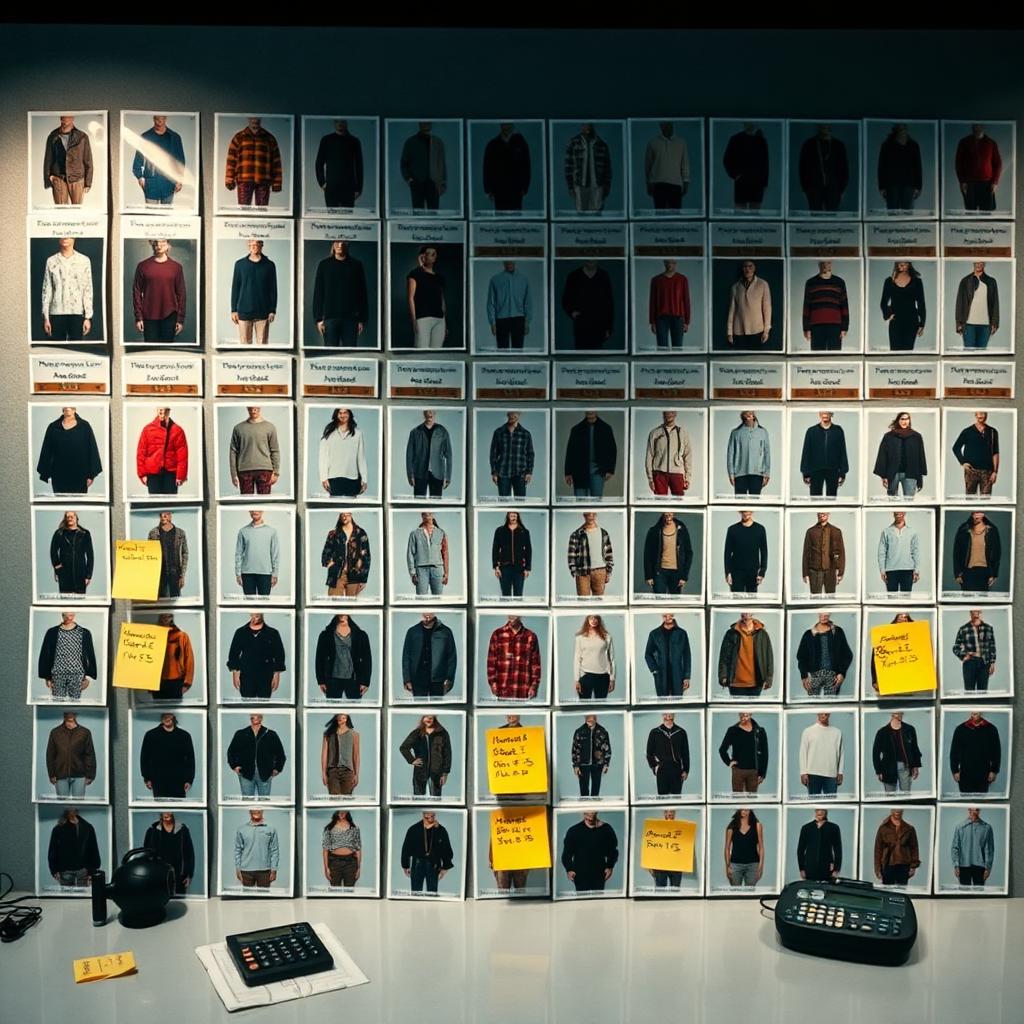
You have a budget, a line plan, and a hunch about what your customers want. Assortment planning is the work that turns that hunch into a defensible buy. It decides how wide to go across categories, how deep to go on each style, and how to split your dollars so you do not end the season buried in dead stock and out of your best seller in week three.
For a small brand, this is the highest-leverage decision you make. Buy too broad and you spread thin across styles that never catch. Buy too deep on the wrong item and you carry it into markdown. This guide covers what assortment planning is, width versus depth, how to set the split, the steps to build a plan, the mistakes that hurt small brands most, and how to keep it connected to product.
Table of Contents
- TL;DR: Assortment planning in five lines
- What is assortment planning?
- Width vs depth: the core tradeoff
- Assortment planning vs line planning
- Why small brands get assortment wrong
- The 6 steps to build an assortment plan
- The size curve: the depth decision people skip
- Assortment planning: the old way vs a connected way
- Common assortment mistakes for small brands
- What to look for in an assortment planning tool
- How assortment planning affects your margin and cash
- How Kampana handles assortment and line plan review
- FAQ
- The bottom line
TL;DR: Assortment planning in five lines
- Assortment planning is the merchandising process of deciding which products, in what variety and depth, you will carry for a season, channel, or location (Oracle).
- It runs on two levers. Width (breadth) is how many categories and styles you carry. Depth is how many units, colors, and sizes you carry per style (daVinci Retail).
- Small brands usually go too wide and too shallow, so nothing has enough depth to sell through cleanly.
- The split between width and depth should follow your budget, your customer, and each style's role, not your enthusiasm.
- Plan it, then measure it. Sell-through rate is units sold divided by units received, times 100, with a common target floor near 80 percent (Shopify). Map your plan to Kampana's line plan review workflow.
What is assortment planning?
Assortment planning is the process of deciding which products, in what variety and how much depth, a brand will carry for a given season, channel, or location (Oracle). It takes the styles from your line plan and decides how to buy them: how many, in which colors, across which sizes, for which channel.
Where a line plan answers "what styles," the assortment plan answers "how much of each, and where." It is the difference between a list of products and an actual buy. For the document that feeds it, see our guide to the fashion line plan.

Striking the right balance between breadth and depth lets brands attract customers, build loyalty, and protect gross margin while keeping inventory costs down (ViSenze). For a small brand with limited cash, that balance is not a nicety. It is the whole game.
Width vs depth: the core tradeoff
Every assortment decision comes down to two numbers pulling against each other: how wide and how deep. Understanding them is most of the job.
Width, also called breadth, is the number of distinct categories and product types you carry. A wide assortment spreads a smaller number of products across many categories: tops, bottoms, jackets, accessories (daVinci Retail).
Depth is how many variations you carry within each type: colorways, sizes, and units. A deep assortment goes heavy on one category with many options and plenty of stock per option (daVinci Retail).
| Lever | What it is | More of it means | Risk if overdone |
|---|---|---|---|
| Width (breadth) | Number of categories and styles | More choice, broader appeal | Budget spread thin, nothing sells through |
| Depth | Units, colors, sizes per style | Fewer stockouts on winners | Cash locked in one bet, markdown if wrong |
You have one budget. Every dollar of width is a dollar not spent on depth, and vice versa. The art of assortment planning is putting depth behind your proven winners and keeping width disciplined enough that you can actually back the things that work.
For a small brand, the default mistake is too much width. It feels safer to offer more. In practice it leaves every style too shallow to sell through and too thin to reorder.
Assortment planning vs line planning
These two are constantly confused, and the order matters. Line planning defines the products. Assortment planning decides how those products are distributed across channels, stores, and time (Centric Software).
In sequence: you set a budget, build a line plan inside it, then build the assortment plan from the locked line plan. The line plan is the "what." The assortment plan is the "how much and where."
| Line plan | Assortment plan | |
|---|---|---|
| Core question | What styles, what price, what date? | How much of each, in what colors and sizes, where? |
| Output | The list of styles | The buy quantities by option, size, and channel |
| Comes | First | After the line plan is locked |
| Levers | Architecture, roles, price ladder | Width and depth, size curve, channel split |
If you have not built the line plan yet, start there. The assortment plan acts on it, so a shaky line plan produces a shaky buy. See how to build the fashion line plan first, then come back here.
Why small brands get assortment wrong
Small brands have the least room for error and the most pressure to look big. That combination produces predictable mistakes.
The biggest is over-width. You want the store to look full, so you add styles. But your budget did not grow, so each style gets a tiny buy. Now nothing has the depth to sell through cleanly, and you cannot reorder fast enough on the few that work.
The cost shows up at the industry level too. Fashion's overproduction is valued at $70 to $140 billion a year, and discounting keeps climbing as brands clear what they should not have bought (Business of Fashion). A tight assortment is the small brand's defense against joining that pile.
Here is what getting it wrong looks like:
- Too wide, too shallow. Forty styles, six units each. Your hero sells out in a week and you cannot chase it.
- Depth on the wrong item. You bought deep on a guess instead of a proven seller, and now it is the markdown rack.
- A broken size curve. You bought a flat curve and stocked out of mediums while smalls and XLs sat.
- No channel logic. The same buy went to your site and a wholesale account that needs a different mix.
None of these are taste failures. They are planning failures, and planning is fixable.
The 6 steps to build an assortment plan
Work in order. The budget and the customer come before any quantity.
Step 1: Start from the budget and the customer
Your open-to-buy sets the ceiling. It is planned sales, plus planned markdowns, plus planned end-of-month inventory, minus beginning-of-month inventory (Shopify). That number is the total you are splitting across width and depth.
Then anchor on the customer. Who buys from you, what do they come back for, and what do they buy alongside it. The assortment should reflect their behavior, not your taste. A wide, generic range signals you do not know who you serve.
Step 2: Set your width: how many categories and styles
Decide the categories you will carry and how many styles in each. Be ruthless. For a small brand, fewer categories done deep almost always beats more categories done shallow.
Tie width back to the line architecture you set in the line plan. If the line plan says six tops and four bottoms, your width is mostly set. The assortment plan confirms it survives the budget once depth is added.
Step 3: Set your depth: units per style and size curve
Now decide how deep to go on each style. Depth is units, colors, and sizes. Concentrate depth on the styles most likely to sell: your heroes and proven core. Keep newness shallow until it proves itself.
This is where the size curve lives, and it is the step most small brands rush. More on that below.
Step 4: Split the buy by role and risk
Use the role tags from your line plan to set depth. Heroes and core get depth because they carry volume. Carryover gets depth because it is already proven. Newness stays shallow because it is a test.
| Role | Width treatment | Depth treatment |
|---|---|---|
| Hero | Few, focused | Deep, you market around it |
| Core | Steady count | Deep, reliable volume |
| Carryover | As needed | Deep, proven and low-risk |
| Newness | Limited | Shallow, prove before you chase |
This split is how you protect cash. You put the money where the evidence is and keep your bets small.
Step 5: Plan by channel
A small brand selling direct, wholesale, and on marketplaces does not need the same assortment everywhere. Your site can carry the full range and the long tail. A wholesale account needs a tighter, buyer-ready edit. Marketplaces reward your proven sellers.
Plan the assortment per channel so each gets the mix that fits it. For the wholesale edit specifically, see the B2B digital showroom kit. For marketplace-ready product, see how to optimize fashion products for marketplaces.
Step 6: Pressure-test against sell-through
Before you commit, project sell-through for each style and the plan as a whole. Sell-through rate is units sold divided by units received, times 100, and a common target floor is around 80 percent (Shopify).
If a style needs an unrealistic sell-through to justify its depth, cut the depth. If the whole plan only works at numbers you have never hit, the plan is too big. Trim until it is honest, then commit.
The size curve: the depth decision people skip
Depth is not just total units. It is how those units split across sizes, and getting it wrong wastes the buy. A flat split across sizes is almost never right. Most brands sell a bell curve, with the middle sizes moving fastest.
If you buy a flat curve, you stock out of your core sizes while the edges sit. That is a double loss: lost sales on the sizes people wanted and markdowns on the sizes they did not. Build your size curve from your own sales history where you have it, and from category norms where you do not (Bamboo Rose).
A simple way to think about it:
- Pull last season's size split by category, if you have it.
- Weight the buy toward the sizes that actually sold, not an even spread.
- Keep a little extra on the most popular size so you do not stock out mid-season.
- Re-check the curve per category. Outerwear and knits do not always sell the same curve as tops.
The size curve is depth at the unit level. Skip it and even a well-sized buy leaks money.
Assortment planning: the old way vs a connected way
Most small brands plan the assortment in a spreadsheet that lives apart from the line plan, the product, and the actuals. The numbers drift, and by the time you see a problem it is a markdown.
| Spreadsheet-only assortment | Connected assortment | |
|---|---|---|
| Source | A file, separate from line plan | One canvas, linked to the line plan |
| Width and depth | Hand-keyed, easy to lose track | Surfaced against budget live |
| Size curve | Often a flat guess | Built from history, visible per style |
| Channel splits | One buy for everything | A plan per channel |
| Review | A meeting | Shared view plus approval gate |
| Who decides | Whoever has the file | Human approval plus product-fidelity QA |
The connected version keeps the assortment, the line plan, and the product in the same place, so a change to depth or width shows up against your budget immediately. That is the job of Kampana's line plan review workflow.
Common assortment mistakes for small brands
Mistake 1: Too wide, too shallow
The signature small-brand error. More styles, less of each, nothing sells through. Fix it by cutting width and putting the saved budget into depth on proven styles (daVinci Retail).
Mistake 2: Depth on unproven product
Going deep on a style with no track record is a big bet with no basis. Fix it by keeping newness shallow and chasing it only after it proves out.
Mistake 3: A flat size curve
Buying even units across sizes stocks you out of the middle and overstocks the edges. Fix it by weighting the curve toward the sizes that actually sell (Bamboo Rose).
Mistake 4: One assortment for every channel
Your site, your wholesale accounts, and marketplaces want different mixes. Fix it by planning depth and width per channel.
Mistake 5: Planning without a sell-through target
Without a target, you cannot tell an ambitious buy from a reckless one. Fix it by setting a sell-through goal and trimming any style that needs an unrealistic number to justify its depth (Shopify).
What to look for in an assortment planning tool
A spreadsheet is a fine start. When you outgrow it, look for these, not a longer feature list:
- Width and depth visible against budget, so you see the tradeoff as you make it (Oracle).
- A size-curve view per style and category, not a single flat split.
- Channel-level planning, so you can build a different mix for site, wholesale, and marketplaces.
- A link to the actual product, so the buy connects to the design, the tech pack, and the sell-in assets.
- A review mode with approval gates, so committing the buy is a decision, not a default.
- Honest pricing that does not punish you for modeling a few scenarios.
The point is closing the gap between the plan and the product, so the buy you commit is the buy you intended.
How assortment planning affects your margin and cash
Assortment planning is where a small brand's cash gets allocated. Every unit of depth is money committed months before it sells. Get the width and depth split right and your cash sits in styles that sell through at full price. Get it wrong and it sits in a markdown rack.
With inventory excellence and margin protection now top of the agenda across fashion, the buy is the lever that matters most (Business of Fashion). For a small brand, a disciplined assortment is also a cash-flow tool. Tighter width frees cash to reorder winners fast, which is where the real margin is.
A good assortment does three things at once: it attracts the right customer, it protects gross margin, and it keeps inventory costs down (ViSenze). For a brand counting every dollar, that is the difference between a season that funds the next one and a season that eats it.
How Kampana handles assortment and line plan review
An assortment plan only works if it stays connected to the line plan and the product. Kampana is an AI product creation OS for fashion brands. It runs your collection on a node-based canvas, so the line plan, the assortment, and the product live together, with approval gates and product-fidelity QA at every step.
What you get
- A line plan and assortment review on one canvas, with each style linked to its design and tech pack.
- Width and depth surfaced against your budget as you plan, not re-keyed across tabs.
- A size-curve view per style so depth is split smartly, not flat.
- Channel-aware planning, so site, wholesale, and marketplace buys can differ.
- A human approval gate on the committed buy, with a clean handoff into the end-to-end launch.
The old way vs Kampana
| Old way | With Kampana | |
|---|---|---|
| Where it lives | A spreadsheet, apart from product | One canvas, linked to line plan and product |
| Width and depth | Hand-tracked | Surfaced against budget live |
| Size curve | Flat guess | Per-style view |
| Channels | One buy for all | A plan per channel |
| Who decides | Whoever has the file | Human approval plus product-fidelity QA |
How it works
- Pull your locked line plan onto the canvas.
- Set width and depth per style, with the size curve in view.
- Let the canvas check the buy against budget and projected sell-through.
- Split by channel, then review and approve the committed assortment.
Pricing is credit-based. One shared pool, no seats, no subscription, and credits never expire. There is a free starter pack to run your first review, and the line plan review workflow uses a modest credit range because it is structure and QA, not heavy rendering. See credit pricing for current ranges.
FAQ
What is the difference between assortment planning and line planning?
Line planning defines the products. Assortment planning decides how those products are distributed across channels, stores, and time, and how much depth each gets (Centric Software). The line plan comes first; build it with our fashion line plan guide.
What is width and depth in assortment planning?
Width, or breadth, is the number of categories and styles you carry. Depth is how many units, colors, and sizes you carry per style (daVinci Retail). Width is variety; depth is commitment per style.
Should a small brand go wide or deep?
Most small brands should go narrower and deeper than they want to. Limited budgets get spread too thin across too many styles, so nothing sells through. Concentrate depth on proven styles and keep width disciplined (daVinci Retail).
How do I set the right size curve?
Use your own sales history by category where you have it, weighting the buy toward the sizes that actually sell rather than an even spread. Where you lack history, start from category norms and adjust after the first season (Bamboo Rose).
How do I know if my assortment plan worked?
Compare planned sell-through to actual. Sell-through is units sold divided by units received, times 100, with many retailers aiming for at least 80 percent (Shopify). Clean full-price sell-through means the width and depth split matched demand.
Do I need different assortments for different channels?
Usually, yes. Your site can carry the full range, wholesale needs a tighter buyer-ready edit, and marketplaces reward proven sellers. Plan depth and width per channel rather than shipping one buy everywhere.
Can AI do assortment planning for a small brand?
AI can surface the width and depth tradeoff against your budget, build size curves from history, and project sell-through. The final buy should stay with a human behind an approval gate. Kampana keeps the math and QA automated and the decision owned.
The bottom line
Assortment planning is how a small brand spends its budget without burying itself in dead stock. It is two levers, width and depth, balanced against one budget, one customer, and the role each style plays. Go too wide and nothing sells through. Put depth behind your winners and you free the cash to chase them.
The brands that survive the buy are not the ones with the biggest range. They are the ones who went narrow enough to go deep where it counts, planned a real size curve, and set a sell-through target they could defend. The discipline is cheap. The markdown rack is not.
Kampana keeps the assortment, the line plan, and the product in one place, with width, depth, and sell-through in view and a human owning the call. Start with one review and see the whole buy at once.
Review your fashion line plan · Explore fashion workflows · Start creating, free
Metadata
title: Assortment Planning for Small Fashion Brands (2026) | Kampana
canonical: https://kampana.io/blog/assortment-planning
meta-description: Assortment planning balances width and depth against one budget. Learn how small fashion brands set the split, plan size curves, and protect margin.
meta-keywords: assortment planning, assortment plan, width and depth, breadth and depth, size curve, fashion merchandising, small fashion brand, open-to-buy, sell-through
meta-robots: index, follow, max-image-preview:large, max-snippet:-1
og:type: article
og:title: Assortment Planning for Small Fashion Brands (2026)
og:description: Width vs depth, size curves, and channel splits. How small brands build a buy that sells through.
og:url: https://kampana.io/blog/assortment-planning
og:image: https://kampana.io/og/assortment-planning.png
twitter:card: summary_large_image
twitter:title: Assortment Planning for Small Fashion Brands (2026)
twitter:description: Go narrow enough to go deep where it counts. The small-brand assortment guide.
twitter:image: https://kampana.io/og/assortment-planning.png
article:author: Kampana
article:published_time: 2026-06-24T15:00:00Z
Schema (JSON-LD)
{
  "@context": "https://schema.org",
  "@graph": [
    {
      "@type": "Article",
      "headline": "Assortment Planning for Small Fashion Brands (2026)",
      "description": "Assortment planning balances width and depth against one budget. Learn how small fashion brands set the split, plan size curves, and protect margin.",
      "author": {"@type": "Organization", "name": "Kampana"},
      "publisher": {"@type": "Organization", "name": "Kampana", "logo": {"@type": "ImageObject", "url": "https://kampana.io/logo.png"}},
      "datePublished": "2026-06-24",
      "mainEntityOfPage": "https://kampana.io/blog/assortment-planning"
    },
    {
      "@type": "HowTo",
      "name": "How to build an assortment plan for a small fashion brand",
      "step": [
        {"@type": "HowToStep", "name": "Start from the budget and the customer", "text": "Set the open-to-buy ceiling and anchor on customer behavior."},
        {"@type": "HowToStep", "name": "Set your width", "text": "Decide how many categories and styles to carry."},
        {"@type": "HowToStep", "name": "Set your depth", "text": "Decide units, colors, and sizes per style, including the size curve."},
        {"@type": "HowToStep", "name": "Split the buy by role and risk", "text": "Put depth behind heroes, core, and carryover; keep newness shallow."},
        {"@type": "HowToStep", "name": "Plan by channel", "text": "Build a different mix for site, wholesale, and marketplaces."},
        {"@type": "HowToStep", "name": "Pressure-test against sell-through", "text": "Project sell-through and trim depth that needs unrealistic numbers."}
      ]
    },
    {
      "@type": "FAQPage",
      "mainEntity": [
        {"@type": "Question", "name": "What is the difference between assortment planning and line planning?", "acceptedAnswer": {"@type": "Answer", "text": "Line planning defines the products. Assortment planning decides how those products are distributed across channels and how much depth each gets."}},
        {"@type": "Question", "name": "What is width and depth in assortment planning?", "acceptedAnswer": {"@type": "Answer", "text": "Width is the number of categories and styles you carry. Depth is how many units, colors, and sizes you carry per style."}},
        {"@type": "Question", "name": "Should a small brand go wide or deep?", "acceptedAnswer": {"@type": "Answer", "text": "Most small brands should go narrower and deeper, concentrating depth on proven styles and keeping width disciplined."}},
        {"@type": "Question", "name": "How do I set the right size curve?", "acceptedAnswer": {"@type": "Answer", "text": "Use your own sales history by category, weighting the buy toward the sizes that actually sell rather than an even spread."}},
        {"@type": "Question", "name": "How do I know if my assortment plan worked?", "acceptedAnswer": {"@type": "Answer", "text": "Compare planned sell-through to actual. Sell-through is units sold divided by units received times 100, with many retailers aiming for at least 80 percent."}},
        {"@type": "Question", "name": "Do I need different assortments for different channels?", "acceptedAnswer": {"@type": "Answer", "text": "Usually yes. Site can carry the full range, wholesale needs a tighter edit, and marketplaces reward proven sellers."}},
        {"@type": "Question", "name": "Can AI do assortment planning for a small brand?", "acceptedAnswer": {"@type": "Answer", "text": "AI can surface width and depth against budget, build size curves, and project sell-through, but the final buy should stay with a human behind an approval gate."}}
      ]
    },
    {
      "@type": "BreadcrumbList",
      "itemListElement": [
        {"@type": "ListItem", "position": 1, "name": "Home", "item": "https://kampana.io/"},
        {"@type": "ListItem", "position": 2, "name": "Blog", "item": "https://kampana.io/blog"},
        {"@type": "ListItem", "position": 3, "name": "Assortment Planning for Small Fashion Brands", "item": "https://kampana.io/blog/assortment-planning"}
      ]
    }
  ]
}
Lovable implementation prompt
Create a new blog post page at /blog/assortment-planning for kampana.io.

Title: "Assortment Planning for Small Fashion Brands (2026)"
Byline: By the Kampana team, June 24, 2026, 14 min read.

Layout:
- Render the markdown body with a sticky, clickable Table of Contents (anchor links to every H2/H3).
- Hero image slot at top with the alt text provided. Use Kampana-generated visuals; flag product screenshots vs generated diagrams per the inline HTML comments.
- Style tables with the site's standard table component (zebra rows, sticky header).
- Insert the JSON-LD schema block (Article + HowTo + FAQPage + BreadcrumbList) into the page head.
- Apply metadata exactly as in the Metadata block (title, canonical, meta-description, OG, Twitter).
- Internal links should use the site's link component and open in the same tab.
- Add a primary CTA button group at the end linking to /workflows/review-a-fashion-line-plan, /workflows, and /pricing.
- Primary keyword "assortment planning" appears in H1, TL;DR, and early body. Keep it natural.
- Do not publish. Leave in draft for human review and approval.
Send one product URL. Kampana turns it into a mini campaign pack.