Fashion Line Plan: What It Is and How to Build One (2026)
A fashion line plan is a budget with clothes attached. Here is what goes in it, how it differs from assortment planning, and the steps to build one that holds.
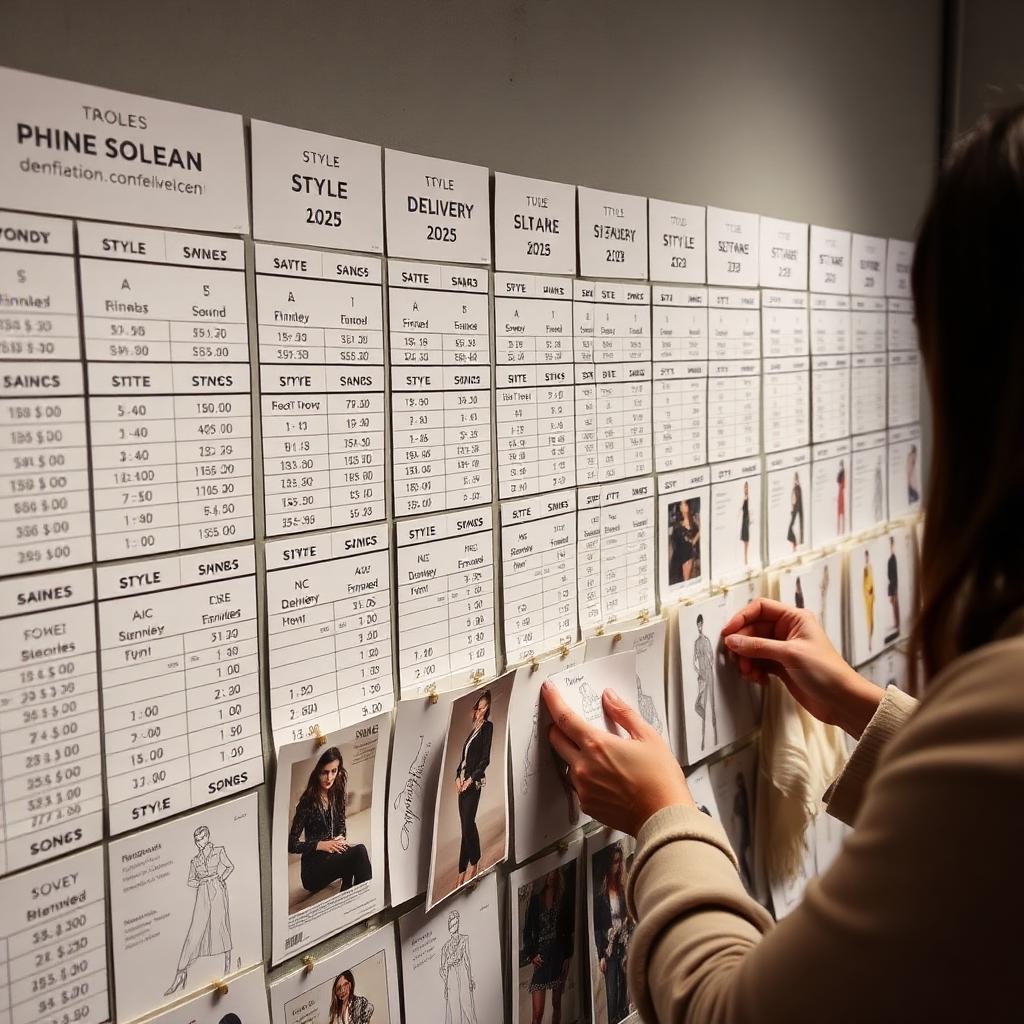
You have a folder full of sketches and a gut feeling about the season. What you do not have is the one document that tells you whether those sketches add up to a buyable collection. That document is a fashion line plan. It is the spreadsheet, board, or canvas that lists every style you intend to make, with its category, price, delivery, and role, before you spend a dollar on sampling.
A line plan is not a wish list. It is a budget with clothes attached. This guide covers what a fashion line plan is, what goes in it, how it differs from assortment planning, the steps to build one, the mistakes that quietly wreck a season, and how to keep the whole thing on one canvas.
Table of Contents
- TL;DR: Fashion line plan in five lines
- What is a fashion line plan?
- Line plan vs assortment plan vs range plan
- What goes in a line plan
- Why most brands skip the line plan (and pay for it)
- The 7 steps to build a fashion line plan
- What a line plan should not decide for you
- Line plan: the old way vs a connected way
- How to read a line plan: the metrics that matter
- Common line plan mistakes and how to avoid them
- What to look for in a line planning tool
- How a line plan affects your margin and cash
- How Kampana handles line plan review
- FAQ
- The bottom line
TL;DR: Fashion line plan in five lines
- A fashion line plan is a structured list of every style in a collection, with its category, price band, delivery window, and role, used to align design, merchandising, and sourcing before sampling (Centric Software).
- It is built around a budget. The open-to-buy sets how much you can spend on new inventory before you choose a single style (Shopify).
- A line plan answers four questions at once: what styles, how many, at what price, by what date.
- Every style needs a role. Heroes drive demand, core carries volume, carryover protects margin, and newness keeps the brand fresh. Do not let every style be a new style.
- The plan decides structure and surfaces tradeoffs. Humans decide the edit and what to cut. Map yours to Kampana's line plan review workflow to keep it honest before you commit to production.
What is a fashion line plan?
A fashion line plan is the master list of everything a brand will produce for a season. It names each style, sorts it into a category and price band, sets its delivery date, and tags its job in the collection. Done right, it is the single source of truth that design, merchandising, and sourcing all work from.
Line planning is the formulation of the parameters and guidelines for a collection. It maps the option counts of a new range by attributes like end use, price band, color group, and print type, so design and sourcing stay aligned (Solvoyo). In plain terms: it turns a creative idea into a countable, costable, schedulable list.

The line plan sits between concept and design. Concept gives you a direction. Design gives you garments. The line plan is the bridge that makes sure the garments you design are the ones the season, the budget, and the channel actually need. For the work that feeds it, see how to turn brand DNA into a collection concept.
Think of it as the season on one page. If you cannot see your whole collection at once, with prices and dates, you do not have a plan. You have a pile of ideas.
Line plan vs assortment plan vs range plan
These three terms get used as if they mean the same thing. They do not, and the confusion costs brands money. Here is the clean version.
A line plan defines the products. It is where specific styles are identified that will become the collection. An assortment plan decides how those products are distributed across channels, stores, and time. The line plan comes first, the assortment plan acts on it (Centric Software).
"Range plan" is the term many brands outside the US use for the same artifact as a line plan. A range plan is a roadmap that lays out the option counts of a new collection by attribute (Solvoyo). For most small brands, range plan and line plan are the same document under two names.
| Document | Core question | When | Owner |
|---|---|---|---|
| Line plan (range plan) | What styles, how many, what price, what date? | First, before design | Merchandising / founder |
| Assortment plan | Which styles go to which channel, store, or window? | After the line plan | Buying / planning |
| Open-to-buy plan | How much money can we spend? | Feeds the line plan | Finance / merchandising |
The order matters. You set the budget, build the line plan inside it, then plan the assortment from the locked list. Skip the budget and the line plan becomes fiction. For the deeper distinction between depth and width at the assortment stage, see our guide on assortment planning for small fashion brands.
What goes in a line plan
A useful line plan has one row per style and a fixed set of columns. Skinnier than this and you cannot make decisions. Fatter than this and nobody updates it.
Here are the columns every line plan needs.
| Column | What it captures | Example |
|---|---|---|
| Style number | Unique ID per style | TOP-024 |
| Name | Human label | Linen Camp Shirt |
| Category | The slot it fills | Warm-weather woven top |
| Role | Its job in the line | Hero |
| Price band | Where it sits on the ladder | Mid ($120) |
| Target cost | Landed cost at target margin | $44 |
| Colorways | How many color options | 3 |
| Delivery | When it ships to channel | Delivery 1, March |
| Status | Where it is in development | Tech pack in progress |
Add a small number of derived columns and the plan starts to do work for you: target margin percent, units planned, and projected sell-through. A line plan with margin math built in tells you whether the season pencils out before you sample anything (Points of Measure).

Keep the option count honest. Option count is the total number of distinct style-color combinations in the line. Ten styles in three colors each is thirty options. Buyers and factories count options, not styles, so your plan should too (Bamboo Rose).
Why most brands skip the line plan (and pay for it)
Small brands skip the line plan because it feels like paperwork that slows down the fun part. The cost shows up six months later, in unsold inventory and a markdown rack.
The numbers at the industry level are stark. Fashion's overproduction is valued at $70 to $140 billion a year, and brands lean on markdowns to clear what they should not have made in the first place (Business of Fashion). A line plan is the cheapest tool for not joining that statistic.
Here is what skipping the plan looks like in practice:
- You design what excites you, not what the budget supports, and run out of open-to-buy halfway through the range.
- Every style is "new," so you carry no proven sellers and bet the whole season on untested product.
- The price ladder has a hole in the middle, so customers either trade down or bounce.
- Delivery dates are an afterthought, so half the line lands late and goes straight to markdown.
None of these are taste problems. They are structure problems, and a line plan is the structure. The brands that ship clean seasons are not more creative. They decided what the season was before they fell in love with the styles.
The 7 steps to build a fashion line plan
This is the practical build. Work top to bottom. Do not start at the styles.
Step 1: Set the season frame and dates
Start with the calendar, because it sets every internal deadline. The fashion calendar runs about six months ahead of retail. Spring/summer is shown in September and lands in stores from January, fall/winter is shown in February and lands from July (FashionUnited).
Plan backward from your delivery date. If a delivery ships in March and production takes 90 to 120 days, tech packs need to be locked by late fall, which means design has to be done before that. Write the delivery windows at the top of the plan first (Heuritech).
Step 2: Build your open-to-buy budget
The open-to-buy is the dollar amount you have to spend on new inventory after accounting for current stock and existing orders. The formula is: planned sales, plus planned markdowns, plus planned end-of-month inventory, minus planned beginning-of-month inventory (Shopify).
This number is the ceiling on your whole line plan. Set it before you choose styles. A line plan built without a budget is a wish list, and wish lists do not survive contact with a factory minimum.
Step 3: Lay out the line architecture
Line architecture is the skeleton: how many styles in each category and price band, before any specific style exists. Decide you need, say, six tops, four bottoms, two dresses, and one outerwear piece. Then split those across price bands so the ladder is complete.
This is where you control option count. Each slot is a job to be filled, not a style you already love. Filling the architecture first stops you from designing eight jackets and zero bottoms.
Step 4: Fill the slots with styles
Now bring in the design. Map each sketch or concept to a slot in the architecture. A linen camp shirt fills the "warm-weather woven top" slot. A style that does not fit any slot does not go in the plan, no matter how good it is. Park it for next season.
This is also where you tie the plan to the technical work. Every style that survives needs a tech pack and a bill of materials before it can be costed, so connect each row to its technical design assist pack.
Step 5: Assign roles: hero, core, carryover, newness
Every style needs a job. Tag each row with one of four roles:
- Hero: the demand driver you market around. Few of these, high effort.
- Core: the volume styles that pay the bills. Reliable, repeatable.
- Carryover: proven sellers from last season, refreshed not reinvented. They protect margin because development is already paid for.
- Newness: the fresh styles that keep the brand current and give a reason to come back.
A healthy line is not all newness. Carryover and core carry the margin while heroes and newness carry the story. To refresh a proven style instead of building from scratch, see how to refresh a carryover product.
Step 6: Map the price and color story
Lay every style on the price ladder and look for gaps and clusters. If eleven styles sit at one price and nothing sits below it, you have no entry point. If the ladder skips the middle, customers fall through it.
Do the same for color. Plan a color story across the whole line, not style by style, so the collection photographs as a collection and merchandises cleanly online. For the design side of that, see building a color story across a collection.
Step 7: Pressure-test and lock
Before you lock, run the plan against three checks: does it fit the open-to-buy, does it hit your target blended margin, and can every delivery date actually be met given lead times. If any answer is no, cut or move styles until all three are yes.
Then lock it. A locked line plan is the brief for sampling, sourcing, and the end-to-end collection launch. Changing it after this point should be a deliberate decision, not a drift.
What a line plan should not decide for you
A line plan is a structure, not a taste machine. It can tell you the price ladder has a hole. It cannot tell you whether the dress is beautiful.
A plan should never decide the final edit. It surfaces that you have too many tops and a thin bottom count. The human decides which top to cut. It should not auto-set price from a margin formula alone, because positioning and brand matter as much as cost. And it should not pick your hero. Data can show you what sold. It cannot feel what the next thing should be.
Use the plan to make the math visible and the tradeoffs explicit. Keep the final call with a person who owns the season. This is the same approach Kampana takes across every workflow: the tool does the structure and the QA, a human approves the decision.
Line plan: the old way vs a connected way
Most line plans live in a spreadsheet that drifts out of sync with the design files, the tech packs, and the sample tracker within a week. The cost is not the spreadsheet. It is the gap between the plan and everything downstream.
| Spreadsheet-only line plan | Connected line plan | |
|---|---|---|
| Source of truth | One file, emailed around | One canvas, linked to designs and packs |
| Updates | Manual, often stale | Status flows from the actual work |
| Margin math | Re-keyed by hand | Built in, recalculates live |
| Design link | None, lives elsewhere | Each row links to its style and tech pack |
| Review | A meeting and a screen share | A shared view with approval gates |
| Who approves | Whoever has the file open | Human approval gate plus product-fidelity QA |
The connected version is not about fancier software. It is about the plan and the product living in the same place, so a change to one shows up in the other. That is what Kampana's line plan review workflow is for.
How to read a line plan: the metrics that matter
A line plan you cannot read is just a list. These are the numbers that turn it into a decision tool.
Option count. Total style-color combinations. This is what you are really buying and what factories quote against (Bamboo Rose).
Blended margin. The weighted average margin across the whole line at target cost. One low-margin hero can be fine if core and carryover lift the blend.
Projected sell-through. The share of units you expect to sell at full price in the window. Sell-through rate is units sold divided by units received, times 100, and a common target floor is around 80 percent (Shopify). Plan to it, then measure against it after the season.
Newness ratio. The share of options that are brand new versus carryover. High newness means high risk. There is no single correct number, but a line that is 100 percent new is a line with no safety net.
| Metric | What it tells you | Watch for |
|---|---|---|
| Option count | Scale of the buy | Creep past your budget |
| Blended margin | Whether the season pays | One hero dragging the average |
| Projected sell-through | Demand realism | Optimism with no basis |
| Newness ratio | Risk level | 100% new, zero carryover |
Common line plan mistakes and how to avoid them
Mistake 1: Designing before budgeting
The classic error. You fall in love with styles, then try to make the math work backward. Fix it by setting the open-to-buy first and treating it as a hard ceiling (Shopify).
Mistake 2: Too much newness
Every style new feels exciting and is quietly reckless. You have no proven sellers to lean on. Fix it by deliberately tagging roles and keeping a real carryover and core base.
Mistake 3: A broken price ladder
Clusters at one price and gaps elsewhere lose customers at the edges. Fix it by laying every style on the ladder in step six and filling the gaps before you lock.
Mistake 4: Ignoring the calendar
A great line that lands late is a markdown line. Fix it by planning backward from delivery dates and killing any style whose lead time does not fit (FashionUnited).
Mistake 5: A plan nobody updates
A line plan that goes stale the day after the meeting is worse than no plan, because people trust it. Fix it by keeping the plan connected to the actual work so status updates itself.
What to look for in a line planning tool
Most brands start in a spreadsheet, and that is fine for a first season. When you outgrow it, look for these things rather than a longer feature list:
- One source of truth that the whole team works from, not a file that gets emailed and forked.
- Built-in margin and option-count math so you are not re-keying numbers between tabs.
- A link from each row to the actual product: the design, the tech pack, the sample status.
- A review mode with approval gates so locking the plan is a real decision, not a vibe (Oracle).
- Honest pricing that does not punish you for adding a few more styles to evaluate.
The point is not software for its own sake. It is closing the gap between the plan and the product so the season you ship is the season you planned.
How a line plan affects your margin and cash
A line plan is a cash document before it is a creative one. Every row is money you commit to fabric, sampling, and production months before any of it sells.
Get the plan right and your cash goes into styles that sell through at full price. Get it wrong and your cash sits on a markdown rack. With inventory excellence and margin protection now at the top of the agenda for fashion executives, the buy decision is the lever that matters most (Business of Fashion).
The line plan is also where margin is won or lost. You set target costs and price bands here, long before sourcing negotiates a single fabric. A disciplined plan with carryover and a complete ladder protects the blended margin. A plan that is all newness at one price band bets the whole season on a guess.
This is the bridge to product. Once the plan is locked, the work is execution: design, tech packs, samples, PDP, sell-in. The cleaner the plan, the cleaner that whole chain runs.
How Kampana handles line plan review
A line plan only works if it stays connected to the product. Kampana is an AI product creation OS for fashion brands. It runs your collection on a node-based canvas, so the plan and the product live in the same place, with approval gates and product-fidelity QA at every step.
What you get
- A line plan review you can run on the canvas, with each style linked to its design and tech pack.
- Margin, option count, and role tags surfaced as you build, not re-keyed across tabs.
- Gaps and clusters in the price ladder and color story made visible before you lock.
- A human approval gate on the locked plan, so the decision is owned, not drifted into.
- A direct handoff from the locked plan into design, technical design, and the end-to-end launch.
The old way vs Kampana
| Old way | With Kampana | |
|---|---|---|
| Where the plan lives | A spreadsheet, separate from product | One canvas, linked to designs and packs |
| Keeping it current | Manual, goes stale fast | Status flows from the real work |
| Spotting gaps | A meeting and a squint | Surfaced as you build |
| Review | Screen share | Shared view plus approval gate |
| Who decides | Whoever has the file | Human approval plus product-fidelity QA |
How it works
- Drop your styles on the canvas and sort them into the line architecture.
- Wire each style to its design, colorways, and tech pack.
- Let the canvas surface margin, option count, gaps, and role balance.
- Review and approve the locked plan, then hand it straight to production and launch.
Pricing is credit-based. You draw from one shared pool with no seats and no subscription, and credits never expire. There is a free starter pack to run your first line plan review, and the review workflow uses a modest credit range because it is structure and QA, not heavy rendering. See credit pricing for the current ranges.
FAQ
What is the difference between a line plan and a tech pack?
A line plan is the season-level list of every style with its price, role, and delivery. A tech pack is the style-level spec sheet a factory uses to make one garment. The line plan decides what to make. The tech pack says how to make it. See our guide to creating a fashion tech pack with AI.
Is a line plan the same as a range plan?
For most brands, yes. "Range plan" is the term used widely outside the US for the same artifact: a roadmap of the collection's option counts by attribute (Solvoyo). Both name the document that lists styles by category, price, and delivery before design is locked.
How many styles should be in a line plan?
There is no universal number. It is set by your open-to-buy budget and your option-count target, not by ambition. Decide the budget first, then fit as many styles as the budget and your factory minimums allow (Shopify).
What is open-to-buy and why does it come first?
Open-to-buy is the dollar amount available for new inventory after accounting for current stock and existing orders. It comes first because it is the ceiling on the whole line plan. Building styles before setting it produces a list you cannot afford to make (Shopify).
How do I measure if a line plan worked?
After the season, compare planned sell-through to actual. Sell-through rate is units sold divided by units received, times 100, and many retailers aim for at least 80 percent (Shopify). High sell-through at full price means the plan matched demand. Heavy markdowns mean it did not.
Can AI build my line plan for me?
AI can structure the plan, surface gaps, and do the margin and option-count math instantly. It should not make the final edit or pick your hero. Kampana keeps the structure and QA automated and the decisions behind a human approval gate, which is the right split for a document this consequential.
What is the difference between line planning and assortment planning?
Line planning defines the products. Assortment planning decides how those products are distributed across channels, stores, and time (Centric Software). The line plan comes first. For the next step, read assortment planning for small fashion brands.
The bottom line
A fashion line plan is the season decided on one page. It names every style, sorts it by category and price, sets its delivery, and gives it a job, all inside a budget you set first. It is the difference between a collection that ships clean and a markdown rack full of good ideas.
The brands that win the buy decision are not more creative. They make the math visible before they fall in love with the styles, they keep carryover in the mix, and they lock a plan that production can actually execute. The plan is cheap. The unsold inventory is not.
Kampana keeps the line plan and the product in the same place, with the math surfaced and a human owning the call. Start with one line plan review and see the whole season at once.
Review your fashion line plan · Explore fashion workflows · Start creating, free
Metadata
title: Fashion Line Plan: What It Is and How to Build One (2026) | Kampana
canonical: https://kampana.io/blog/fashion-line-plan
meta-description: A fashion line plan lists every style by category, price, and delivery inside a budget. Learn what it is, what goes in it, and how to build one.
meta-keywords: fashion line plan, line plan, range plan, line planning, open-to-buy, merchandising, assortment planning, option count, fashion merchandising
meta-robots: index, follow, max-image-preview:large, max-snippet:-1
og:type: article
og:title: Fashion Line Plan: What It Is and How to Build One (2026)
og:description: The line plan is the season on one page. What goes in it, how it differs from assortment planning, and the 7 steps to build one.
og:url: https://kampana.io/blog/fashion-line-plan
og:image: https://kampana.io/og/fashion-line-plan.png
twitter:card: summary_large_image
twitter:title: Fashion Line Plan: What It Is and How to Build One (2026)
twitter:description: The line plan is a budget with clothes attached. Build one in 7 steps.
twitter:image: https://kampana.io/og/fashion-line-plan.png
article:author: Kampana
article:published_time: 2026-06-24T09:00:00Z
Schema (JSON-LD)
{
  "@context": "https://schema.org",
  "@graph": [
    {
      "@type": "Article",
      "headline": "Fashion Line Plan: What It Is and How to Build One (2026)",
      "description": "A fashion line plan lists every style by category, price, and delivery inside a budget. Learn what it is, what goes in it, and how to build one.",
      "author": {"@type": "Organization", "name": "Kampana"},
      "publisher": {"@type": "Organization", "name": "Kampana", "logo": {"@type": "ImageObject", "url": "https://kampana.io/logo.png"}},
      "datePublished": "2026-06-24",
      "mainEntityOfPage": "https://kampana.io/blog/fashion-line-plan"
    },
    {
      "@type": "HowTo",
      "name": "How to build a fashion line plan",
      "step": [
        {"@type": "HowToStep", "name": "Set the season frame and dates", "text": "Plan backward from delivery dates using the fashion calendar."},
        {"@type": "HowToStep", "name": "Build your open-to-buy budget", "text": "Set the dollar ceiling for new inventory before choosing styles."},
        {"@type": "HowToStep", "name": "Lay out the line architecture", "text": "Decide how many styles per category and price band."},
        {"@type": "HowToStep", "name": "Fill the slots with styles", "text": "Map each design to a slot in the architecture."},
        {"@type": "HowToStep", "name": "Assign roles", "text": "Tag each style as hero, core, carryover, or newness."},
        {"@type": "HowToStep", "name": "Map the price and color story", "text": "Lay styles on the ladder and plan color across the line."},
        {"@type": "HowToStep", "name": "Pressure-test and lock", "text": "Check budget, margin, and calendar, then lock the plan."}
      ]
    },
    {
      "@type": "FAQPage",
      "mainEntity": [
        {"@type": "Question", "name": "What is the difference between a line plan and a tech pack?", "acceptedAnswer": {"@type": "Answer", "text": "A line plan is the season-level list of every style with price, role, and delivery. A tech pack is the style-level spec a factory uses to make one garment."}},
        {"@type": "Question", "name": "Is a line plan the same as a range plan?", "acceptedAnswer": {"@type": "Answer", "text": "For most brands, yes. Range plan is the term used outside the US for the same artifact listing styles by category, price, and delivery."}},
        {"@type": "Question", "name": "How many styles should be in a line plan?", "acceptedAnswer": {"@type": "Answer", "text": "There is no universal number. It is set by your open-to-buy budget and option-count target, not by ambition."}},
        {"@type": "Question", "name": "What is open-to-buy and why does it come first?", "acceptedAnswer": {"@type": "Answer", "text": "Open-to-buy is the dollars available for new inventory after current stock and orders. It is the ceiling on the whole line plan."}},
        {"@type": "Question", "name": "How do I measure if a line plan worked?", "acceptedAnswer": {"@type": "Answer", "text": "Compare planned sell-through to actual. Sell-through is units sold divided by units received times 100, with many retailers aiming for at least 80 percent."}},
        {"@type": "Question", "name": "Can AI build my line plan for me?", "acceptedAnswer": {"@type": "Answer", "text": "AI can structure the plan and do the math, but the final edit and hero pick should stay with a human behind an approval gate."}},
        {"@type": "Question", "name": "What is the difference between line planning and assortment planning?", "acceptedAnswer": {"@type": "Answer", "text": "Line planning defines the products. Assortment planning decides how they are distributed across channels, stores, and time."}}
      ]
    },
    {
      "@type": "BreadcrumbList",
      "itemListElement": [
        {"@type": "ListItem", "position": 1, "name": "Home", "item": "https://kampana.io/"},
        {"@type": "ListItem", "position": 2, "name": "Blog", "item": "https://kampana.io/blog"},
        {"@type": "ListItem", "position": 3, "name": "Fashion Line Plan: What It Is and How to Build One", "item": "https://kampana.io/blog/fashion-line-plan"}
      ]
    }
  ]
}
Lovable implementation prompt
Create a new blog post page at /blog/fashion-line-plan for kampana.io.

Title: "Fashion Line Plan: What It Is and How to Build One (2026)"
Byline: By the Kampana team, June 24, 2026, 14 min read.

Layout:
- Render the markdown body with a sticky, clickable Table of Contents (anchor links to every H2/H3).
- Hero image slot at top with the alt text provided. Use Kampana-generated visuals; flag product screenshots vs generated diagrams per the inline HTML comments.
- Style tables with the site's standard table component (zebra rows, sticky header).
- Insert the JSON-LD schema block (Article + HowTo + FAQPage + BreadcrumbList) into the page head.
- Apply metadata exactly as in the Metadata block (title, canonical, meta-description, OG, Twitter).
- Internal links should use the site's link component and open in the same tab.
- Add a primary CTA button group at the end linking to /workflows/review-a-fashion-line-plan, /workflows, and /pricing.
- Primary keyword "fashion line plan" appears in H1, TL;DR, and early body. Keep it natural.
- Do not publish. Leave in draft for human review and approval.
Send one product URL. Kampana turns it into a mini campaign pack.