Hero Product Selection: How to Pick Your Drivers (2026)
Hero products are the styles you lead a season with. Here is how to pick the right few, set the success metric, and stop spreading your launch budget thin.
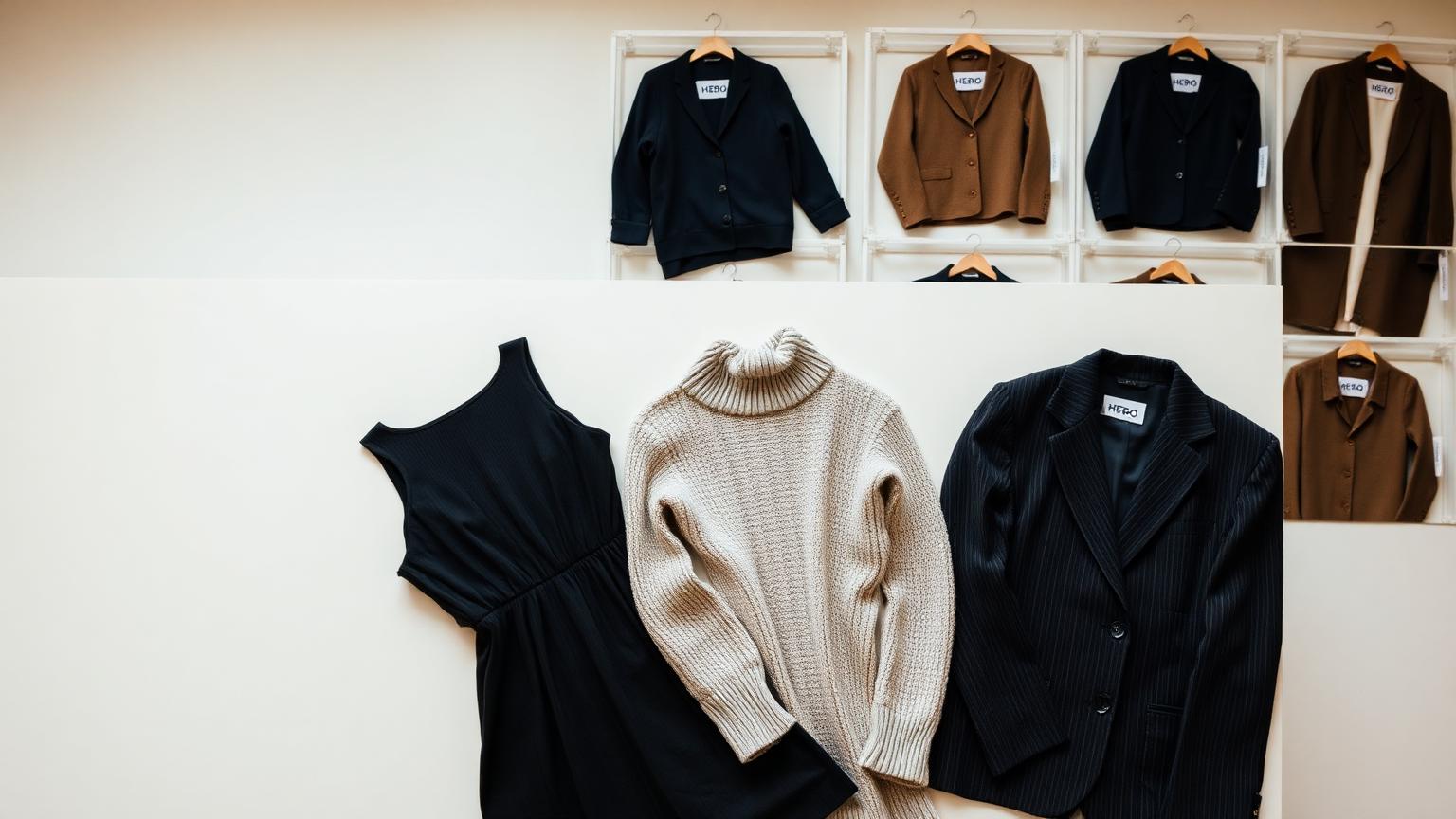
You have a collection of twenty styles and a marketing budget that can only properly push three. So which three? Most brands answer that question with a feeling, then spread the budget thin across everything and wonder why nothing breaks out. The styles you choose to lead with are your hero products, and picking them is a merchandising decision, not a mood.
A hero is not your favorite style. It is the style that earns the spotlight. This guide covers what a hero product is, why brands pick the wrong ones, the signals that point to a real driver, the step-by-step selection process, the mistakes that waste a launch, and how to keep hero selection tied to the rest of your line.
Table of Contents
- TL;DR: Hero product selection in five lines
- What is a hero product?
- Hero vs core vs carryover vs newness
- Why brands pick the wrong heroes
- The signals that mark a real hero
- The 7 steps to pick your hero products
- Step 1: Start from the line plan, not the mood board
- Step 2: Read the demand signals you already have
- Step 3: Check margin and supply before you commit
- Step 4: Score each candidate against the hero test
- Step 5: Cap the number of heroes
- Step 6: Build the asset plan around each hero
- Step 7: Set the success metric before launch
- How many hero products should a collection have?
- What hero selection should not decide for you
- Hero selection: the old way vs a connected way
- Common hero selection mistakes and how to avoid them
- What to look for in a hero selection process
- How hero selection affects your launch and revenue
- How Kampana handles hero product selection
- FAQ
- The bottom line
TL;DR: Hero product selection in five lines
- A hero product is the style you lead a season with: the demand driver you build marketing, imagery, and merchandising around. Few of them, high effort.
- Heroes matter because a small share of styles drives most of the revenue. The 80/20 pattern shows up across retail, so the styles you push should be the ones that move the needle (Triple Whale).
- Pick heroes from demand signals and margin, not taste. Past sell-through, search and pre-order interest, and a healthy margin matter more than which style you love most (Shopify).
- Cap the count. A collection has room for a handful of heroes, not a dozen. Spreading the budget across everything is how nothing breaks out.
- Hero selection is a merchandising decision inside the line plan. Map yours to Kampana's line plan review workflow so the picks are tied to the rest of the season, not made in a vacuum.
What is a hero product?
A hero product is the style a brand leads with. It is the one you put at the top of the homepage, build the campaign around, and shoot the most assets for. Heroes are the flagship items that are popular with shoppers, drive sales, and shape how the brand is perceived (Triple Whale).
Think of the styles every brand is known by. The trench, the perfect tee, the one bag that shows up in every editorial. Best sellers become heroes that scale into volume and revenue franchises, and brands build stories around them on purpose (Business of Fashion).
A hero is not the same as a best seller, though the two overlap. A best seller is a fact about the past. A hero is a bet about the season ahead. You choose a hero before the season to concentrate effort, then the market tells you whether you chose right. The job of hero selection is to make that bet with evidence instead of vibes.
Every collection needs heroes because attention does not spread evenly. You cannot give twenty styles a real campaign. You can give three of them one. The question is which three.
Hero vs core vs carryover vs newness
Hero is one of four roles every style in a line plan should carry. Confusing the roles is how brands end up marketing the wrong thing. Here is the clean version.
A hero drives demand and gets the spotlight. Core carries the volume and pays the bills. Carryover is a proven seller from last season, refreshed not reinvented, and it protects margin because development is already paid for. Newness keeps the brand current and gives customers a reason to come back (McKinsey).
| Role | Its job | How many | Marketing effort |
|---|---|---|---|
| Hero | Drive demand and attention | Few | High |
| Core | Carry volume and margin | Several | Medium |
| Carryover | Protect margin, low risk | Some | Low |
| Newness | Keep the brand fresh | A handful | Medium |
A hero can also be a carryover. A proven style from last season, given a fresh colorway and a new campaign, is often a safer hero than something brand new. To rework a proven style instead of building from scratch, see how to refresh a carryover product.
The point of the four roles is balance. A line that is all heroes has no heroes, because nothing stands out. Assign the roles first, in the line plan, then the hero choice has a frame.
Why brands pick the wrong heroes
Most brands pick heroes with their gut, then back-fill a reason. The result is a campaign built around the founder's favorite style instead of the customer's.
Here is what bad hero selection looks like in practice:
- You pick the most creative, most expensive-to-make style because it is the most fun, even though margin is thin and supply is fragile.
- You pick the style you personally love, with no demand signal behind it, and discover after launch that the customer wanted something else.
- You crown too many heroes, split the budget across all of them, and none gets enough push to break out.
- You pick a hero with no inventory depth, sell out in three days, and spend the rest of the season apologizing.
None of these are taste failures. They are process failures. The brands that pick well do not have better instincts. They look at the signals before they fall in love.
There is a real cost to getting this wrong. Fashion's overproduction is valued at $70 to $140 billion a year, and a misjudged hero means budget and inventory poured into a style the market did not want (Business of Fashion). Hero selection is one of the cheapest places to avoid that mistake, because it happens before the spend.
The signals that mark a real hero
A hero candidate should clear three kinds of signal: demand, economics, and supply. A style strong on one and weak on the others is not ready to lead.
Demand signals. Past sell-through is the single best evidence. Sell-through rate is units sold divided by units received, times 100, and a strong full-price sell-through marks a style customers actually want (Shopify). For new styles with no history, look at search interest, wishlist and pre-order activity, and what is already moving in the category.
Economic signals. A hero you cannot make money on is a marketing expense, not a driver. Check the margin at target cost, and check that the price sits in a band customers will pay. A hero is worth concentrating effort on only if every unit it sells earns its keep.
Supply signals. A hero needs depth. If you can only make 200 units, putting your whole campaign behind it means selling out fast and leaving demand on the table. Confirm the factory can hit the volume and the lead time before you crown it.
| Signal type | What to check | Green light |
|---|---|---|
| Demand | Past sell-through, search, pre-orders | Strong full-price sell-through or clear interest |
| Economics | Margin at target cost, price band | Healthy margin, payable price |
| Supply | Factory volume and lead time | Depth to meet the demand you create |
A real hero clears all three. Two out of three makes it a strong core style, not a hero. Keep that bar honest and you stop crowning styles that cannot carry the weight.
The 7 steps to pick your hero products
This is the practical process. Run it inside your line plan, not as a separate exercise.
Step 1: Start from the line plan, not the mood board
Hero selection is a merchandising decision, so it starts where the merchandising lives. Open the line plan with every style, its category, price band, role, and margin already in place. If you do not have that, build it first. Picking a hero without the line plan is picking in the dark.
Look at the whole season at once. You are choosing which styles to concentrate effort on, and you can only judge that against the full set.
Step 2: Read the demand signals you already have
Pull the evidence before opinions enter the room. For returning styles, sort by full-price sell-through and flag the top performers (Shopify). For new styles, gather search interest, category trends, and any pre-order or wishlist data.
Write the signal next to each candidate. A style with a strong number behind it earns a different conversation than one with only a feeling.
Step 3: Check margin and supply before you commit
Filter the demand list through economics and supply. Drop any candidate whose margin at target cost is too thin to justify the spend, and any whose factory cannot deliver the depth a hero needs. A hero that sells out in a week or loses money per unit is not a hero.
This step kills most of the romantic picks early, which is the point. It is cheaper to cut a candidate here than after the campaign is shot.
Step 4: Score each candidate against the hero test
Take the survivors and score them on the three signals: demand, economics, supply. A simple high, medium, low on each is enough. The styles that score high across all three are your hero pool.
This turns a debate into a comparison. Instead of arguing about which style is best, you are looking at a scored grid where the strong candidates are obvious.
Step 5: Cap the number of heroes
Decide how many heroes the budget can actually carry, then hold the line. Most collections support a handful, not a dozen. The cap forces a real choice and stops the budget from spreading so thin that nothing breaks out.
If two styles tie for the last slot, pick the one with the stronger demand signal, not the one you like more. The cap is where discipline pays off.
Step 6: Build the asset plan around each hero
A hero earns more assets than the rest of the line. Plan the full set for each one: on-model imagery, detail shots, a PDP asset pack, a social campaign, and the sell-in materials buyers will want. This is where the spotlight becomes real.
A drop is not a post. It is a campaign. The hero is what the campaign is built around, so give it the production the role deserves.
Step 7: Set the success metric before launch
Decide what success looks like before the hero ships. Set a target full-price sell-through, a revenue share, or a return-on-spend number, and write it down (Shopify). After the season, compare actual to target.
This closes the loop. A hero that hits its number proves the process. One that misses tells you which signal to weight differently next time.
How many hero products should a collection have?
There is no universal number, but the principle is simple: as many as you can give a real campaign, and no more. For a small brand, that is often two or three per season. For a larger one with more budget and channels, it might be a handful per category.
The constraint is attention and money, not ambition. The 80/20 pattern in retail says a small share of styles drives most of the revenue, so concentrating effort on a few is the right move (Triple Whale). The failure mode is always too many, never too few.
| Brand stage | Typical hero count | Why |
|---|---|---|
| First seasons, tight budget | 1 to 2 | One real campaign is better than three thin ones |
| Growing, multiple channels | 3 to 5 | Budget supports a few drivers |
| Established, multi-category | A handful per category | Each category needs its own lead |
Pick the number your budget can fund properly, then make every hero count. A crowded hero list is a sign the choice was avoided, not made.
What hero selection should not decide for you
A scoring process makes the bet visible. It does not make the bet for you. There are calls that stay with a person who owns the season.
The data can show you which styles have the strongest signals. It cannot feel which one captures where the brand is going next. A hero is partly a statement, and a statement is a human call. The signals narrow the field and stop you from picking on pure romance. The final crown is yours.
Hero selection also should not override brand. A style might score well on demand and still be wrong to lead with because it points the brand in a direction you do not want. Use the signals to inform the decision, not to outsource it. This is the same split Kampana takes across every workflow: the tool surfaces the structure and the math, a human approves the call.
Hero selection: the old way vs a connected way
In most brands, hero selection happens in a meeting, disconnected from the line plan and the asset pipeline. Someone names a favorite, the room nods, and the budget gets committed before anyone checks the margin or the supply.
| The old way | A connected way | |
|---|---|---|
| Where it happens | A meeting, from memory | On the canvas, against the line plan |
| Evidence | Gut and loudest voice | Sell-through, margin, supply, side by side |
| Link to assets | Re-briefed from scratch | Hero flows straight into its asset plan |
| Number of heroes | Drifts upward | Capped on purpose |
| Who approves | Whoever runs the meeting | Human approval gate plus product-fidelity QA |
The connected version is not about more software. It is about making the hero choice where the data and the product already live, so the pick is grounded and the handoff to production is clean. That is what Kampana's line plan review workflow is for.
Common hero selection mistakes and how to avoid them
Mistake 1: Picking your favorite, not the customer's
The most common error. You lead with the style you love instead of the one with demand behind it. Fix it by writing the demand signal next to every candidate before anyone states a preference (Shopify).
Mistake 2: Too many heroes
Crown a dozen and you have crowned none, because the budget spreads too thin to break any of them out. Fix it by setting a hard cap before you pick and holding it.
Mistake 3: Ignoring margin
A hero with thin margin turns a successful launch into a loss. Fix it by filtering every candidate through margin at target cost before it makes the pool.
Mistake 4: No inventory depth
A hero that sells out in three days leaves money on the table and customers frustrated. Fix it by confirming the factory can hit the volume and lead time before you commit the campaign.
Mistake 5: No success metric
A hero with no target cannot be judged, so you never learn whether the pick was right. Fix it by setting a sell-through or revenue-share goal before launch and measuring against it after (Shopify).
What to look for in a hero selection process
Whether you do this in a spreadsheet or on a canvas, a good hero selection process has the same traits. Look for these rather than a longer feature list:
- Tied to the line plan, so heroes are chosen against the whole season, not in isolation.
- Built on real signals: sell-through, margin, and supply, surfaced together (Shopify).
- A hard cap on the number, so the budget concentrates instead of spreading.
- A clean handoff to assets, so the chosen heroes flow straight into their imagery and campaign work.
- A human approval gate, so crowning a hero is a real decision, not a vibe (McKinsey).
The goal is to make the bet with evidence and then commit fully. A scattered process makes scattered bets, and scattered bets are how launches fizzle.
How hero selection affects your launch and revenue
Hero selection is a leverage decision. The few styles you put the budget behind determine where most of your marketing return comes from, because a small share of styles drives most of the revenue (Triple Whale).
Pick the right heroes and the budget compounds. The campaign, the imagery, and the merchandising all point at styles customers want, and the sell-through follows. Pick the wrong ones and you spend the same money pushing styles the market shrugs at, then watch the rest of the season carry the load.
This is also where launch effort gets concentrated. Once the heroes are chosen, the asset work, the PDP packs, and the social campaigns all line up behind them. The cleaner the hero choice, the cleaner that whole chain runs, all the way to the end-to-end launch.
How Kampana handles hero product selection
Hero selection only works when it is tied to the line plan and the product. Kampana is an AI product creation OS for fashion brands. It runs your collection on a node-based canvas, so hero choices, the line plan, and the assets that follow all live in the same place, with approval gates and product-fidelity QA.
What you get
- A hero shortlist scored against the whole line plan, with sell-through, margin, and role surfaced together.
- The signals that mark a real hero laid out side by side, so the pick is grounded, not guessed.
- A hard cap you set, so the budget concentrates on real drivers.
- A clean handoff from each chosen hero into its PDP asset pack and social campaign.
- A human approval gate on the final picks, so crowning a hero is owned, not drifted into.
The old way vs Kampana
| Old way | With Kampana | |
|---|---|---|
| Where heroes are picked | A meeting, from memory | On the canvas, against the line plan |
| Evidence | Gut and the loudest voice | Sell-through, margin, supply, side by side |
| Handoff to assets | Re-briefed from scratch | Hero flows straight into its asset plan |
| Number of heroes | Drifts upward | Capped on purpose |
| Who decides | Whoever runs the room | Human approval plus product-fidelity QA |
How it works
- Drop your styles on the canvas with their line plan data attached.
- Let the canvas surface demand, margin, and supply signals for each candidate.
- Score and cap the hero pool, then approve the final picks.
- Hand each hero straight into its imagery, PDP, and campaign work.
Pricing is credit-based. You draw from one shared pool with no seats and no subscription, and credits never expire. There is a free starter pack to run your first review, and the line plan review workflow uses a modest credit range because it is structure and QA, not heavy rendering. See credit pricing for current ranges.
FAQ
What is a hero product in fashion?
A hero product is the style a brand leads a season with: the demand driver you build marketing, imagery, and merchandising around. Heroes are the flagship items that drive sales and shape how the brand is perceived (Triple Whale). Few of them, high effort.
How is a hero product different from a best seller?
A best seller is a fact about the past: a style that already sold well. A hero is a bet about the season ahead: a style you choose to concentrate effort on before you know how it will do. Best sellers are strong hero candidates, but a hero is a forward-looking pick, not just a backward-looking report.
How many hero products should I have per season?
As many as your budget can give a real campaign, and no more. For a small brand that is often two or three. The 80/20 pattern in retail means a small share of styles drives most of the revenue, so concentrating effort on a few is the right move (Triple Whale).
How do I pick a hero product with no sales history?
Use the demand signals you do have: search interest, category trends, pre-order and wishlist activity, and what is already moving in similar styles. Then filter through margin and supply. A new style can be a hero, but it should still clear the demand, economics, and supply test before you commit the budget.
Can a carryover style be a hero?
Yes, and it is often the safest choice. A proven style from last season, given a fresh colorway and a new campaign, carries demand evidence a brand-new style cannot. To rework a proven style for a new season, see how to refresh a carryover product.
Should AI pick my hero products?
AI can surface the signals, score the candidates, and stop you from picking on pure romance. It should not make the final crown, because a hero is partly a brand statement and that is a human call. Kampana keeps the scoring automated and the decision behind a human approval gate, which is the right split for a choice this consequential.
Where does hero selection fit in the line plan?
Hero is one of four roles every style carries in a line plan: hero, core, carryover, and newness. You assign roles as you build the plan, then concentrate marketing on the heroes. Picking heroes outside the line plan means picking without the context that makes the choice sound.
The bottom line
Hero product selection is the decision about where to point your budget. The few styles you lead with determine where most of your marketing return comes from, so the choice deserves evidence, not a feeling.
The brands that pick well do not have better instincts. They start from the line plan, read the demand signals, filter for margin and supply, cap the number, and set a success metric before they spend a dollar. The romance comes after the math, not instead of it.
Kampana keeps hero selection tied to the line plan and the product, with the signals surfaced and a human owning the call. Pick your drivers with evidence, then give them the campaign they deserve.
Review your fashion line plan · Explore fashion workflows · Start creating, free
Metadata
title: Hero Product Selection: How to Pick Your Drivers (2026) | Kampana
canonical: https://kampana.io/blog/hero-product-selection
meta-description: Hero products are the styles you lead a season with. Learn how to pick your drivers from demand, margin, and supply signals, not a feeling.
meta-keywords: hero product selection, hero products, fashion merchandising, demand drivers, line plan, sell-through, best sellers, assortment planning
meta-robots: index, follow, max-image-preview:large, max-snippet:-1
og:type: article
og:title: Hero Product Selection: How to Pick Your Drivers (2026)
og:description: A hero is not your favorite style. It is the one that earns the spotlight. How to pick your drivers with evidence in 7 steps.
og:url: https://kampana.io/blog/hero-product-selection
og:image: https://kampana.io/og/hero-product-selection.png
twitter:card: summary_large_image
twitter:title: Hero Product Selection: How to Pick Your Drivers (2026)
twitter:description: Pick the few styles you lead with from demand, margin, and supply. Not a feeling.
twitter:image: https://kampana.io/og/hero-product-selection.png
article:author: Kampana
article:published_time: 2026-06-25T09:00:00Z
Schema (JSON-LD)
{
  "@context": "https://schema.org",
  "@graph": [
    {
      "@type": "Article",
      "headline": "Hero Product Selection: How to Pick Your Drivers (2026)",
      "description": "Hero products are the styles you lead a season with. Learn how to pick your drivers from demand, margin, and supply signals, not a feeling.",
      "author": {"@type": "Organization", "name": "Kampana"},
      "publisher": {"@type": "Organization", "name": "Kampana", "logo": {"@type": "ImageObject", "url": "https://kampana.io/logo.png"}},
      "datePublished": "2026-06-25",
      "mainEntityOfPage": "https://kampana.io/blog/hero-product-selection"
    },
    {
      "@type": "HowTo",
      "name": "How to pick your hero products",
      "step": [
        {"@type": "HowToStep", "name": "Start from the line plan", "text": "Open the line plan with every style, price, role, and margin in place."},
        {"@type": "HowToStep", "name": "Read the demand signals", "text": "Pull sell-through, search, and pre-order data for each candidate."},
        {"@type": "HowToStep", "name": "Check margin and supply", "text": "Drop candidates with thin margin or no inventory depth."},
        {"@type": "HowToStep", "name": "Score against the hero test", "text": "Score each survivor on demand, economics, and supply."},
        {"@type": "HowToStep", "name": "Cap the number of heroes", "text": "Set a hard cap the budget can fund and hold it."},
        {"@type": "HowToStep", "name": "Build the asset plan", "text": "Plan the full imagery and campaign set around each hero."},
        {"@type": "HowToStep", "name": "Set the success metric", "text": "Set a sell-through or revenue-share target before launch."}
      ]
    },
    {
      "@type": "FAQPage",
      "mainEntity": [
        {"@type": "Question", "name": "What is a hero product in fashion?", "acceptedAnswer": {"@type": "Answer", "text": "A hero product is the style a brand leads a season with: the demand driver you build marketing, imagery, and merchandising around. Few of them, high effort."}},
        {"@type": "Question", "name": "How is a hero product different from a best seller?", "acceptedAnswer": {"@type": "Answer", "text": "A best seller is a fact about the past. A hero is a forward-looking bet about the season ahead that you choose to concentrate effort on."}},
        {"@type": "Question", "name": "How many hero products should I have per season?", "acceptedAnswer": {"@type": "Answer", "text": "As many as your budget can give a real campaign, often two or three for a small brand. A small share of styles drives most of the revenue."}},
        {"@type": "Question", "name": "How do I pick a hero product with no sales history?", "acceptedAnswer": {"@type": "Answer", "text": "Use search interest, category trends, and pre-order activity, then filter through margin and supply before committing the budget."}},
        {"@type": "Question", "name": "Can a carryover style be a hero?", "acceptedAnswer": {"@type": "Answer", "text": "Yes, and it is often the safest choice. A proven style refreshed for the new season carries demand evidence a brand-new style cannot."}},
        {"@type": "Question", "name": "Should AI pick my hero products?", "acceptedAnswer": {"@type": "Answer", "text": "AI can surface signals and score candidates, but the final crown should stay with a human because a hero is partly a brand statement."}},
        {"@type": "Question", "name": "Where does hero selection fit in the line plan?", "acceptedAnswer": {"@type": "Answer", "text": "Hero is one of four roles every style carries in a line plan: hero, core, carryover, and newness. Assign roles, then concentrate marketing on the heroes."}}
      ]
    },
    {
      "@type": "BreadcrumbList",
      "itemListElement": [
        {"@type": "ListItem", "position": 1, "name": "Home", "item": "https://kampana.io/"},
        {"@type": "ListItem", "position": 2, "name": "Blog", "item": "https://kampana.io/blog"},
        {"@type": "ListItem", "position": 3, "name": "Hero Product Selection: How to Pick Your Drivers", "item": "https://kampana.io/blog/hero-product-selection"}
      ]
    }
  ]
}
Lovable implementation prompt
Create a new blog post page at /blog/hero-product-selection for kampana.io.

Title: "Hero Product Selection: How to Pick Your Drivers (2026)"
Byline: By the Kampana team, June 25, 2026, 13 min read.

Layout:
- Render the markdown body with a sticky, clickable Table of Contents (anchor links to every H2/H3).
- Hero image slot at top with the alt text provided. Use Kampana-generated visuals; flag product screenshots vs generated diagrams per the inline HTML comments.
- Style tables with the site's standard table component (zebra rows, sticky header).
- Insert the JSON-LD schema block (Article + HowTo + FAQPage + BreadcrumbList) into the page head.
- Apply metadata exactly as in the Metadata block (title, canonical, meta-description, OG, Twitter).
- Internal links should use the site's link component and open in the same tab.
- Add a primary CTA button group at the end linking to /workflows/review-a-fashion-line-plan, /workflows, and /pricing.
- Primary keyword "hero product selection" appears in H1, TL;DR, and early body. Keep it natural.
- Do not publish. Leave in draft for human review and approval.
Send one product URL. Kampana turns it into a mini campaign pack.