Fashion Tech Pack Template: What a Complete Apparel Tech Pack Includes (2026)
A fashion tech pack template is more than a spec sheet. Here is every part a complete apparel tech pack needs, from BOM to POM, and how to build one fast.
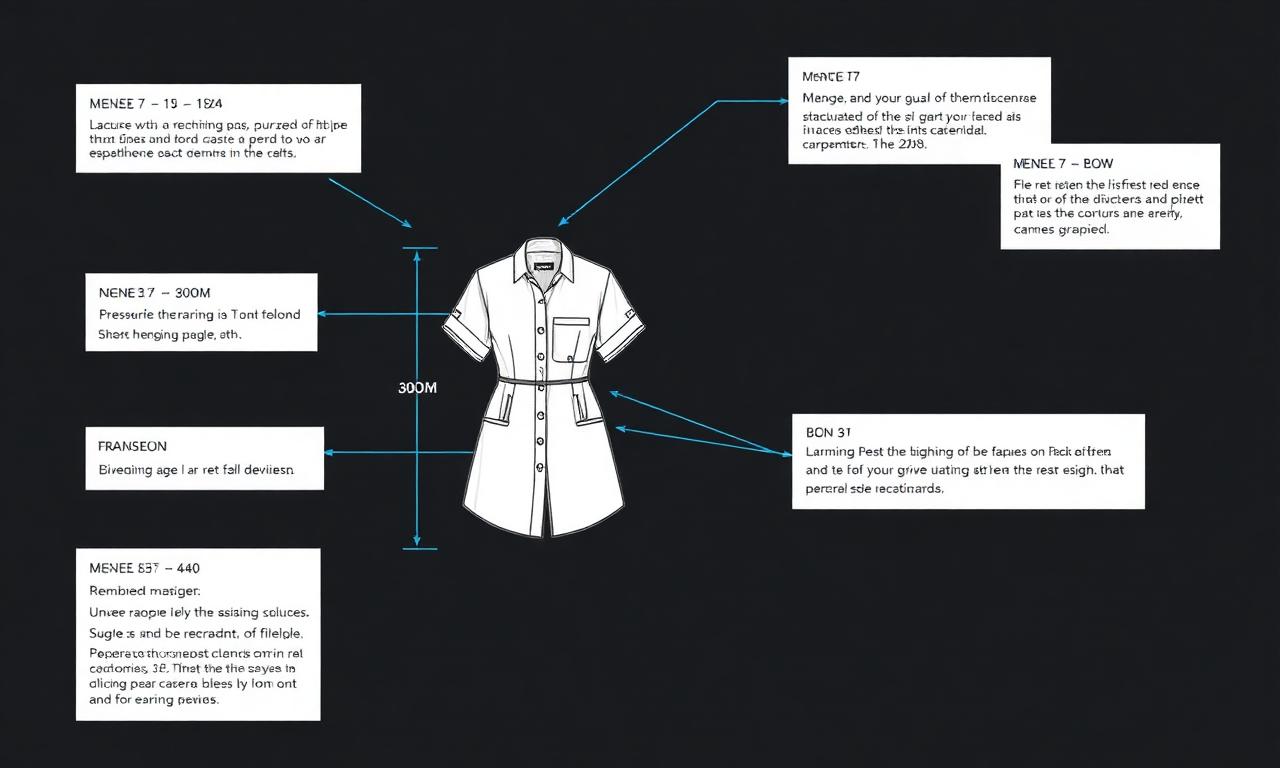
You finished the design. The factory has questions anyway.
What yarn weight. Which thread. How far the pocket sits from the side seam. What the chest measures in a size medium, and how that changes in a large. If those answers are not written down, your sample comes back wrong, and you lose two weeks finding out why.
That document is the tech pack. It is the contract between your idea and the people who make it. A good one is boring, exact, and complete. A weak one is a pretty sketch with gaps the factory fills in for you, usually wrong.
This guide covers what a fashion tech pack is, every part a complete one needs, how the BOM and points of measure work, and how to build one without starting from a blank file every time.
If you only read one thing
- A tech pack is a build contract, not a design. It tells a factory exactly what to make, in what, and to what measurements.
- A complete apparel tech pack has eight parts: spec sheet, BOM, points of measure, construction details, colorways, labels and packaging, grading, and fit history.
- The two parts that break most samples are the BOM and the POM. Wrong materials or vague measurements cause the most costly re-samples.
- A template beats a blank file. Reusing a structured format keeps nothing missing and makes factory communication faster.
- Kampana drafts the tech pack from your design on a node-based canvas, so your technical designer validates a starting pack instead of formatting one from scratch.
What is a fashion tech pack?
A fashion tech pack, short for technical package, is the document a brand sends a factory to get a garment made correctly. It collects every technical detail needed to cut, sew, measure, label, and pack the product.
Think of it as the spec for a physical object. A software team writes a spec before they build a feature. A fashion team writes a tech pack before they cut a sample. Both exist so the people building the thing do not have to guess.
The tech pack travels with the product through development. The factory reads it to make the first sample. Your technical designer marks it up after each fit session. By the time the product is approved, the tech pack reflects exactly what gets produced. Standards bodies like ASTM International publish the apparel sizing and measurement references that a lot of this work leans on, so the language stays consistent across factories.
One rule to anchor the rest of this guide. AI will not replace your technical designer. It gives them a starting pack so they validate instead of format. That is the entire job of a good tech pack process: spend human time on decisions, not on retyping the same fields.
Why an incomplete tech pack costs you samples and money
Every gap in a tech pack becomes a question. Every question becomes an email. Every email becomes a delay. And every wrong assumption becomes a re-sample.
Re-samples are where small brands bleed time. A sample round can take weeks. If the factory guessed the pocket placement because you did not specify it, you find out only when the sample arrives. Now you fix it, send it back, and wait again.
The cost is not only the calendar. It is also fit drift. When a measurement is vague, each factory interprets it differently. Move production to a new supplier and the same product comes back a different size, because the old tech pack never pinned the numbers down.
Here is the pattern incomplete packs create:
- Missing materials mean the factory substitutes what they have on hand.
- Vague measurements mean the fit changes between samples and between factories.
- No construction notes mean seams, stitches, and finishes get decided for you.
- No grading rules mean your size run is inconsistent across the range.
A concept dies on a moodboard. A product dies in re-samples. The fix for both is the same: get the details out of your head and into a structured document the factory can read once and build from.
What a complete apparel tech pack includes
A complete tech pack has eight parts. Skip any of them and you have handed the factory a decision you did not mean to give away.
| Part | What it covers | What goes wrong without it |
|---|---|---|
| Spec sheet | Flat sketches, callouts, overview | Factory misreads the design intent |
| BOM | Every material and trim | Wrong fabric, thread, or hardware |
| POM | Every measurement and tolerance | Fit drifts between samples |
| Construction | Seams, stitches, finishes | Inconsistent build quality |
| Colorways | Each color version and standard | Off-color production runs |
| Labels and packaging | Care labels, hangtags, polybag | Compliance and presentation misses |
| Grading | How measurements scale by size | Inconsistent size run |
| Fit history | Revisions and fit comments | Lost decisions, repeated mistakes |
1. Cover and spec sheet
The spec sheet is the front page. It carries the flat technical sketch, front and back, with callouts pointing to key features. It names the style, the season, the style number, and the intended fabric.
This is the page the whole factory looks at first. It should read at a glance: this is the garment, here are the parts that matter.
2. Bill of materials (BOM)
The BOM lists every physical input. Shell fabric, lining, interfacing, thread, zippers, buttons, drawcords, labels, elastic. For each one you give a description, a supplier or reference, a color, a placement, and a quantity.
The BOM is covered in full in its own section below, because it is one of the two parts that break the most samples.
3. Points of measure (POM)
Points of measure are the specific spots on the garment you measure, with the target number and an allowed tolerance. Chest width, body length, sleeve length, hem opening, neck drop. Each one is measured the same way every time so the factory and the brand are reading from the same map.
This also gets its own section because tolerances are where fit consistency is won or lost.
4. Construction and stitching details
Construction notes tell the factory how to build the seams. Stitch type, stitches per inch, seam allowance, topstitch placement, finish on raw edges. This is also where you specify special operations like bartacks, bindings, or a specific hem.
Two garments cut from the same pattern can feel like different quality levels based on construction alone. Spelling it out keeps quality even across runs.
5. Colorways and color standards
A colorway is one color version of the style. The tech pack shows each colorway and ties every color to a standard so it can be matched in production. Brands usually reference a system like the Pantone color libraries, or supply a physical lab dip, so "navy" means one exact navy and not a guess.
6. Labels, trims, and packaging
This part covers the care label, content label, size label, brand label, hangtags, and how the product is folded, bagged, and boxed. Care labels also carry legal content requirements that vary by market, and fiber content often ties back to material certifications like OEKO-TEX on the BOM.
7. Grading and size range
Grading is the rule for how each point of measure changes from size to size. A chest that is 50 cm in a medium does not become 60 cm in a large. It grows by a set increment. The grading rules turn one base size into a full, consistent size run.
8. Fit history and revisions
The fit history logs every change. After each fit session the technical designer notes what moved, why, and to what new number. This is the memory of the product. It stops the same fit mistake from coming back two samples later, and it keeps the decision trail if production moves to a new factory.
The BOM, explained
The bill of materials is the parts list for the garment. If the spec sheet is the picture, the BOM is everything the picture is made of.
A usable BOM names each material with enough detail that there is nothing to guess. Here is a simplified example for a single hoodie:
| Material | Description | Color / standard | Placement | Quantity |
|---|---|---|---|---|
| Shell | 320 gsm cotton fleece | Pantone 19-4005 | Body, hood, sleeves | 1.6 m |
| Rib | 2x1 cotton rib | Pantone 19-4005 | Cuffs, hem | 0.2 m |
| Thread | Polyester core spun, Tex 40 | Match shell | All seams | as needed |
| Drawcord | Flat cotton drawcord, 8 mm | Off white | Hood channel | 1.4 m |
| Eyelets | Metal, antique brass | Antique brass | Hood, 2x | 2 |
| Main label | Woven damask | Brand standard | Center back neck | 1 |
Notice what the BOM does. It removes choices from the factory. There is no "use a cord" that becomes whatever cord is in the bin. There is a specific cord, in a specific width and color, in a specific place.
A good BOM also future-proofs sourcing. If a material goes out of stock, you can swap one line and keep the rest stable. A vague BOM forces you to rebuild the whole spec when one input changes.
How points of measure actually work
Points of measure are the heart of fit. A POM is three things: where you measure, the target value, and the tolerance you will accept.
The tolerance matters as much as the target. A chest spec of 52 cm with a tolerance of plus or minus 1 cm tells the factory that 51 to 53 cm passes and anything outside fails. Without a tolerance, every sample is technically wrong, because no factory hits an exact number every time.
Here is how a few common points read on a spec:
- Chest width: measured 2.5 cm below the armhole, side seam to side seam. Target 52 cm, tolerance plus or minus 1 cm.
- Body length: measured from high point of shoulder to hem. Target 70 cm, tolerance plus or minus 1.5 cm.
- Sleeve length: measured from center back neck to cuff. Target 86 cm, tolerance plus or minus 1 cm.
Consistency comes from measuring the same way every time. That is why the measurement method is written next to the number, and why brands lean on standardized methods from references like ASTM. When the method drifts, the fit drifts, even if the number on the page never changed.
This is also the stage where 3D and CAD work pays off. If your pattern lives in a CAD tool, the base measurements can carry into the tech pack instead of being retyped. The file formats most of this moves through, like glTF and GLB, keep that data portable.
Tech pack template vs starting from a blank file
You can build every tech pack from scratch. You should not. A template is a structured format you reuse, so the parts are always there and the factory always reads the same layout.
| Blank file each time | Reusable template | |
|---|---|---|
| Setup time | High, you rebuild the structure | Low, structure is already there |
| Missing parts | Common, things get forgotten | Rare, fields are pre-set |
| Factory clarity | Varies by document | Consistent every time |
| Onboarding a new style | Slow | Fast, copy and fill |
| Risk | A field gets dropped | The format protects you |
The template is not the goal on its own. The goal is that nothing gets forgotten and the factory never has to relearn your layout. A template gives you both for free.
The next step beyond a static template is generating the draft pack from the design itself, which is where an AI tech pack assist comes in. The template guarantees structure. The assist fills the structure from the actual product.
How to build a tech pack: step by step
Here is a practical order to build a complete pack without missing anything.
- Start from the flat sketch. Place the front and back technical drawing on the spec sheet and add callouts to the features that matter.
- Build the BOM. List every material and trim with description, color standard, placement, and quantity. Do this before measurements, because materials affect fit.
- Set the points of measure. Define each measurement, its method, its target, and its tolerance for the base size.
- Write the construction notes. Specify seams, stitch types, seam allowance, and any special operations.
- Add colorways and color standards. Show each color version and tie every color to a standard or lab dip.
- Specify labels and packaging. Care label, content, brand and size labels, hangtags, and the fold and bag method.
- Define grading. Set the increment for each point of measure across the size range.
- Send, sample, and log fit history. After the first sample, record every fit change so the next round starts from the corrected numbers.
Run these in order and the pack builds itself logically. Each step depends on the one before it, which is also why connected tools beat scattered ones.
Common tech pack mistakes and how to avoid them
Leaving measurements without tolerances
A target with no tolerance gives the factory an impossible spec. Fix it by adding an allowed range to every point of measure, sized to how critical that point is.
A vague or incomplete BOM
"Cotton fabric" is not a spec. Fix it by naming weight, construction, color standard, and placement for every material, including thread and trims.
No construction detail
If you do not specify the seam and stitch, the factory decides for you, and quality varies. Fix it by writing stitch type, stitches per inch, and seam allowance for the seams that define the garment.
Skipping grading
Sending only the base size and assuming the factory will grade it leads to an inconsistent size run. Fix it by defining the increment for each point of measure before production.
No fit history
When changes live in email threads, decisions get lost and old mistakes return. Fix it by logging every fit change directly on the tech pack, with the date and the new number.
What to look for in a tech pack tool
If you are choosing how to build tech packs, look for these traits.
- Structured templates so nothing gets dropped between styles.
- A clear BOM and POM layout that factories can read without a call.
- Revision tracking so fit history lives with the product.
- Connection to your design and 3D files so measurements and materials carry forward instead of being retyped.
- A human approval step so a technical designer signs off before anything goes to the factory.
- Export factories accept, usually a clean PDF plus the source.
The last point connects to a bigger idea. A tech pack should not be an island. It should sit between the design that came before it and the PDP and campaign assets that come after, all reading from the same approved product.
How a clean tech pack affects your sampling and launch
A complete tech pack changes your timeline before you ever see a sample.
When the factory has every answer up front, the first sample comes back closer to right. Fewer rounds means a shorter development cycle, which means the product is ready sooner. The tech pack is upstream of everything, so time saved there moves the whole launch forward.
It also protects your margin. Re-samples cost money and shipping. Off-spec production runs cost returns and markdowns. A tight tech pack is the cheapest insurance against both.
And it makes you portable. With grading rules, tolerances, and fit history documented, you can move a style to a new factory and get the same product back. Your tech pack is the asset that makes your supply chain flexible instead of locked to one partner.
This is the bridge to the product itself. The faster and cleaner your technical design stage runs, the sooner you reach a full collection launch. The tech pack is where that speed is won or lost.
How Kampana builds your tech pack
Kampana is an AI product creation OS for fashion brands. It turns one product into design, 3D renders, tech packs, PDP imagery, B2B sell-in kits, marketplace feeds, and social campaigns, on a node-based canvas with approval gates.
For technical design, Kampana drafts the starting pack from your design so your technical designer validates instead of formats. The technical design assist pack workflow takes a sketch or design and produces a structured draft you can mark up.
What you get
- A draft spec sheet with your flat and callouts.
- A starting BOM structured for materials, trims, and placement.
- A points of measure list with fields for targets and tolerances.
- Construction and colorway sections ready to complete.
- An export your factory can read, plus the editable source.
The old way vs Kampana
| Old way | With Kampana | |
|---|---|---|
| Starting point | Blank template, retype every field | Draft generated from your design |
| Designer's time | Formatting | Validating and deciding |
| Consistency | Varies by document | Same structure every style |
| Connection to design | Manual, copy and paste | Carried on one canvas |
| Who approves | manual | human approval gate + product-fidelity QA |
How it works
- Drop one product on the canvas.
- Wire it to the technical design assist node.
- Review the draft pack and complete the BOM and POM with your factory specifics.
- Approve, then export the factory-ready files.
Pricing is credit-based. You buy from one shared credit pool. There are no seats and no subscription, and there is a free starter pack to try a real workflow. Use the live credit range shown on the technical design assist pack workflow page and on pricing for the current per-run cost.
Frequently asked questions
What is a tech pack in fashion?
A tech pack is the technical document a brand sends a factory to get a garment made correctly. It includes the spec sheet, bill of materials, points of measure, construction details, colorways, labels, grading, and fit history. It exists so the factory does not have to guess any detail.
What is the difference between a BOM and a tech pack?
The BOM, or bill of materials, is one part of the tech pack. The tech pack is the whole document. The BOM lists every material and trim, while the tech pack also covers measurements, construction, colorways, labels, and grading.
What are points of measure (POM)?
Points of measure are the specific spots on a garment that you measure, each with a target value and an allowed tolerance. They keep fit consistent between samples and between factories. Standardized methods, like those referenced by ASTM International, keep the measurement consistent.
Do I need a tech pack for a small order?
Yes. Even one style benefits from a tech pack, because it prevents re-samples and locks the fit. A small brand often feels the cost of a wrong sample more than a large one, so the document matters more, not less.
Can AI write my tech pack?
AI can draft the structure and pre-fill a tech pack from your design, which saves your technical designer from formatting. It should not make the final fit, fabric, and construction decisions. A person validates and approves the pack before it goes to the factory.
What file format should a tech pack be in?
Factories usually want a clean PDF for reading plus an editable source for revisions. If your design lives in a 3D or CAD tool, portable formats like glTF or GLB help carry measurements and materials into the pack.
How do colorways work in a tech pack?
A colorway is one color version of a style. The tech pack shows each colorway and ties every color to a standard, such as a Pantone reference or a physical lab dip, so production matches your intended color.
What is grading in apparel?
Grading is the rule for how each measurement changes from size to size. It turns one base size into a full, consistent size run by applying a set increment to each point of measure.
The bottom line
A fashion tech pack is not paperwork. It is the build contract that decides whether your sample comes back right and whether your product stays consistent across every run.
A complete one has eight parts: spec sheet, BOM, points of measure, construction, colorways, labels and packaging, grading, and fit history. The two that break the most samples are the BOM and the POM, so spend your detail there. A reusable template makes sure nothing gets dropped, and generating the draft from your design frees your technical designer to validate instead of format.
Get the tech pack right and the whole launch moves faster, because every stage after it reads from a product that is finally pinned down.
Start creating, free. Turn a sketch into a technical design assist pack, or explore fashion workflows to see how the tech pack connects to design, PDP, and launch.
Send one product URL. Kampana turns it into a mini campaign pack.