Virtual Showroom vs Trade Show: A Comparison for Fashion Wholesale (2026)
Virtual showroom or trade show for wholesale sell-in? Here is the honest cost, reach, and conversion comparison, plus how to run both together.
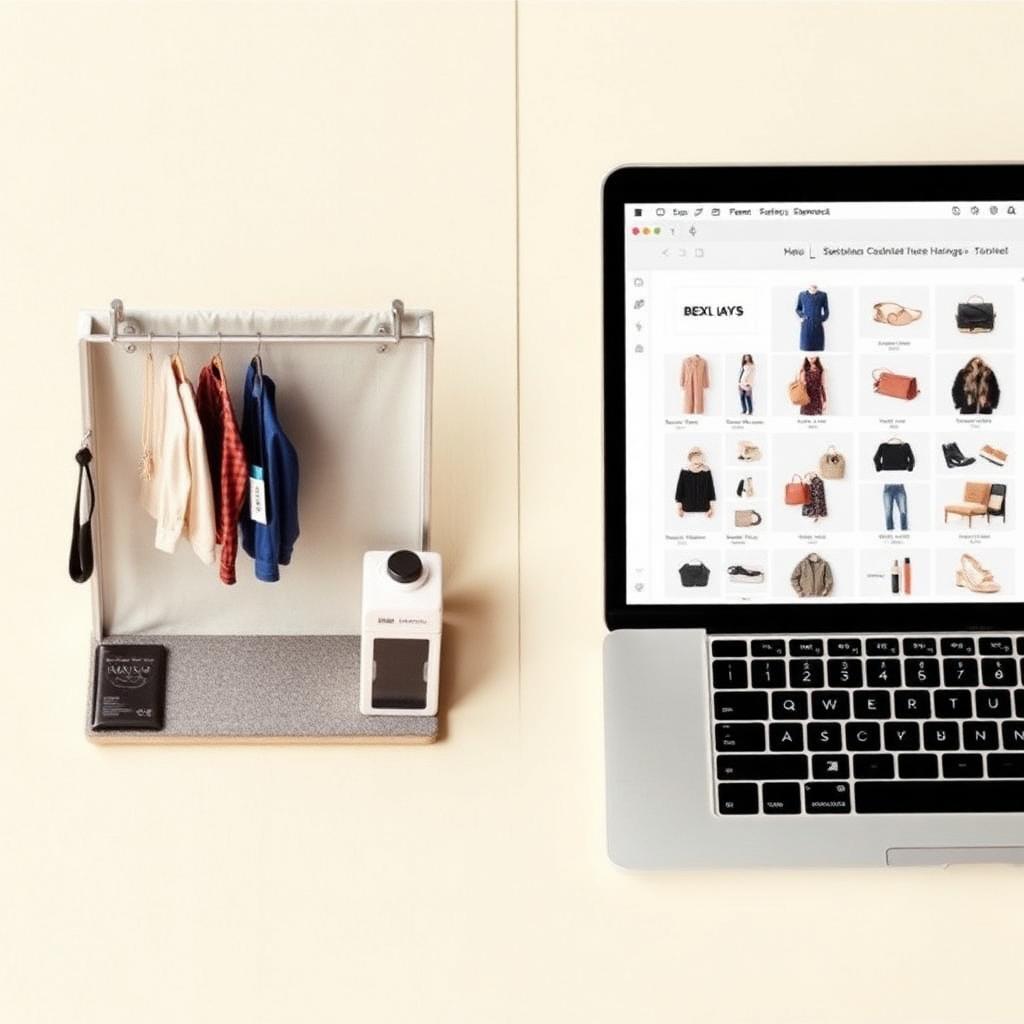
You have one wholesale budget and a season to fill. A booth at a major trade show costs more than some brands spend on an entire collection. A virtual showroom costs a fraction of that and runs all year. So why do brands still pack samples into a trunk and fly to Las Vegas?
Because the answer is not either-or. A virtual showroom for wholesale and a trade show do different jobs, and the brands that win wholesale use both. The trick is knowing what each one is for, what each one really costs, and how to make them feed each other.
This guide compares the two on cost, reach, conversion, and timing, then shows you how to run a combined sell-in that gets the best of both.
If you only read one thing
- A virtual showroom is a digital space buyers can browse and order from year-round. A trade show is a few high-intensity days of in-person meetings.
- Trade shows are expensive. A booth at a major show runs from roughly $5,500 to $8,300 before travel, samples, and freight.
- A virtual showroom costs far less and never closes. It works between shows, across time zones, and for buyers who never make the trip.
- Use both. The trade show builds relationships. The virtual showroom captures the order and keeps selling after the show ends.
- Kampana builds a virtual showroom from one product, on a node-based canvas with approval gates and product-fidelity QA.
Virtual showroom vs trade show: the short answer
A trade show is where you meet buyers. A virtual showroom is where they order, before, during, and after the show.
If you have to choose one because of budget, choose the virtual showroom. It works without a flight, it runs year-round, and a buyer who could not attend market week can still browse and order. A trade show without a way to capture the order is a few good conversations that fade by the time the buyer is back at their desk.
But the real answer is to stop choosing. The trade show and the virtual showroom are not competitors. They are two stages of the same sell-in. Wholesale buyers do not want to wait for a sample trunk. They want a digital showroom they can return to after they shake your hand.
What is a virtual showroom for wholesale?
A virtual showroom is an online space where wholesale buyers browse a brand's collection, see product detail and pricing, and place orders. It is the digital version of the sample room a brand would set up at market.
A good virtual showroom holds everything a buyer needs to commit: clean product imagery, a line sheet with wholesale and retail pricing, size runs, delivery windows, and a way to build and submit an order. Many also include a sell-in video and a lookbook so the buyer feels the brand, not just the spreadsheet.
The category is well established. Platforms like JOOR and NuORDER by Lightspeed host virtual showrooms for thousands of brands, and Shopify's guide to virtual showrooms frames them as standard practice rather than a novelty. WWD has reported that virtual showrooms became a permanent fixture in wholesale, not a temporary fix.
What is a fashion trade show?
A fashion trade show is a multi-day event where brands rent booths and buyers walk the floor to discover collections, see samples, and place orders. Major North American shows include COTERIE in New York and MAGIC in Las Vegas.
A trade show concentrates the season into a few days. Buyers arrive ready to write orders. The energy is high, the competition is on the next aisle, and a brand can meet dozens of buyers it would never reach by email. The 2026 calendar is set: MAGIC and PROJECT run February 17-19 and August 10-12 at the Las Vegas Convention Center, and COTERIE New York is scheduled for September 9-11.
The catch is the cost and the calendar. A trade show happens on specific dates, in a specific city, and the bill is large before a single order is written.
The real cost of a trade show booth
The booth fee is only the start. Here is what a small brand actually spends to exhibit.
| Cost item | Typical range | Notes |
|---|---|---|
| Booth fee | $5,500-$8,300 | MAGIC packages run roughly $5,500-$6,500; COTERIE is around $8,300 |
| Travel and lodging | $1,000-$3,000+ | Flights, hotel for the team, meals |
| Samples and freight | $500-$2,000+ | Producing samples and shipping them in |
| Booth materials and marketing | $300-$1,500 | Signage, line sheets, lookbooks, giveaways |
| Staff time | Varies | Days out of the office, before and during |
Those booth numbers are real and current. MAGIC's all-inclusive packages run roughly $5,500 to $6,500 with tables and chairs included but a 100-sample limit, and COTERIE charges exhibitors around $8,300. Add travel, samples, freight, and materials and a single show can cost a small brand $8,000 to $15,000 or more.
That spend can absolutely pay off. The point is that it is a large, fixed bet placed on a few days. If the buyers you want are not on the floor, or your samples land late, the money is gone either way.
The cost of a virtual showroom
A virtual showroom flips the cost structure. There is no flight, no freight, no booth rental, and no hard date.
The cost is the platform or tool you use to build it, plus the time to produce the assets inside it: imagery, the line sheet, pricing, and ideally a sell-in video. Platform pricing varies, and many brands build the showroom assets once and reuse them across the whole season.
The bigger saving is reuse. The same product imagery, line sheet, and video that fill your virtual showroom also feed your ecommerce PDP and your marketplace feeds. A trade show booth produces a few days of meetings. A virtual showroom produces assets you use everywhere, all season. Your DPC investment should not stop at design review.
Reach: how many buyers each one puts in front of you
Reach is where the two diverge most.
A trade show puts you in front of the buyers who attend, on the days they attend. That is a concentrated, high-intent crowd, but it is bounded by who travels to that show, in that city, on those dates. A buyer in another region, or one who could not get away, never sees you.
A virtual showroom has no door and no closing time. A buyer can browse it from any time zone, on any day, before or after a show. NuORDER reports that it connects more than 3,000 brands with 500,000 buyers and supports thousands of virtual market appointments a year. That scale only works because the showroom is always open.
The honest read: a trade show gives you depth with a smaller, present crowd. A virtual showroom gives you breadth across a larger, always-available one. You want both kinds of reach, which is why neither replaces the other.
Conversion: where orders actually get written
Meeting a buyer is not the same as getting the order. Conversion is where the two channels hand off to each other.
At a trade show, the energy is high and a buyer might write an order on the spot. But many buyers walk the floor, take notes, and decide later. If your only follow-up is an email with a PDF, the momentum from that great booth conversation leaks away.
A virtual showroom is built to convert. The buyer browses, builds an assortment, and submits an order in one flow. Platforms add shoppable video and hotspots so a buyer can order straight from a clip. This is why the strongest sell-ins route every trade show conversation back to the virtual showroom: the show creates the intent, the showroom captures the order.
Speed and timing across the season
Trade shows happen on fixed dates. The 2026 calendar locks MAGIC to February and August and COTERIE to September. If your drop is ready in between, you wait, or you sell in some other way.
A virtual showroom runs on your calendar, not the show's. You can open it the day your line sheet is final, update it when a style sells out, and keep it live for late-ordering buyers. For brands working from 3D and CAD files, you can even stand up the showroom before samples land, using product-accurate renders. A drop is not a single appointment. It is a season of selling.
What a trade show still does better
A virtual showroom does not replace everything. Trade shows still win on a few things that matter.
- Touch and feel. A buyer can handle the fabric, check the weight, and try the fit. No screen fully replaces that for certain categories.
- New relationships. A show puts you in front of buyers who have never heard of you and would not open your email.
- Concentrated intent. Buyers arrive in buying mode, with budget and a plan, which compresses the sales cycle.
- Industry presence. Being on the floor signals that you are a serious brand investing in the channel.
If you are launching a brand or breaking into a new region, a trade show can be worth the spend precisely because it does these things a screen cannot.
What a virtual showroom does better
The virtual showroom wins on the things that compound over a season.
- Always open. It sells between shows, across time zones, and after a buyer goes home.
- Lower cost per buyer. No booth, no flight, no freight, and the assets get reused everywhere.
- Reorders. A buyer can return to the showroom to reorder without waiting for the next market week.
- Data. You can see what buyers viewed and where they dropped off, which a booth cannot tell you.
- Asset reuse. The imagery, line sheet, and video feed your PDP and marketplace feeds too.
The pattern is clear. The trade show is a spike. The virtual showroom is the baseline that keeps selling the rest of the year.
The honest comparison table
| Factor | Trade show | Virtual showroom |
|---|---|---|
| Cost | $8,000-$15,000+ per show, all in | Platform plus asset production; assets reused |
| Reach | Buyers present on those dates | Any buyer, any time zone, year-round |
| Timing | Fixed dates (Feb, Aug, Sep) | Your calendar; open when you are ready |
| Conversion | High intent, but follow-up leaks | Built to capture and submit the order |
| Touch and feel | Yes | No (renders and detail shots instead) |
| New relationships | Strong | Weaker for cold discovery |
| Reorders | Wait for next show | Anytime |
| Asset reuse | Low | High (PDP, feeds, social) |
| Best for | Discovery, relationships, launching | Capturing orders, reorders, year-round sell-in |
The table makes the strategy obvious. The two are strong in different columns. Use the trade show for the columns it wins and the virtual showroom for the rest.
How to run both together: a phygital sell-in
The smart play is to combine them. The industry calls it phygital: physical meetings enhanced with digital tools. Here is how a small brand runs it.
- Build the virtual showroom first. Get your imagery, line sheet, pricing, and sell-in video live before the show.
- Use the show for discovery. Meet buyers, show samples, and have the real conversations a booth makes possible.
- Hand every buyer the showroom link. Instead of "I'll email you a PDF," say "everything is in our showroom, here is your link." The order lives there.
- Follow up through the showroom. After the show, re-warm quiet buyers with the vertical cut of your sell-in video pointing back to the showroom.
- Keep selling after the show. The showroom stays open for buyers who never made the trip and for reorders all season.
This is how you make an expensive show pay off longer. The booth creates the relationship in three days. The showroom converts and reorders for the rest of the year. Our digital showroom guide walks through building the kit that makes this work.
Common mistakes brands make with each
Treating the trade show as the whole sell-in. The show ends and the selling stops. Fix it: route every conversation to a virtual showroom that keeps working.
Following up with a flat PDF. The booth energy fades by the time the buyer is home. Fix it: send a showroom link with a sell-in video, not an attachment.
Building a virtual showroom with weak assets. A showroom full of inconsistent phone photos converts no better than a bad PDF. Fix it: use clean, product-accurate imagery and a real line sheet.
Letting the showroom and the booth tell different stories. Different prices or heroes in each confuse the buyer. Fix it: build both from one source so they match.
Skipping the virtual showroom because you did the show. You leave the year-round and reorder revenue on the table. Fix it: keep the showroom open between shows.
How a virtual showroom affects your wholesale numbers
The financial case for a virtual showroom is not that it beats a trade show. It is that it extends the return on everything else.
A trade show is a fixed cost spent on a few days. A virtual showroom turns those few days into a season. The buyer you met on the floor can reorder in November without waiting for the next show. The buyer who never attended can still find you and order. The imagery you produced gets reused across your PDP and feeds, so the production cost is spread across channels.
We will not invent a conversion lift for you. The verifiable facts are these. Major trade show booths cost thousands of dollars before travel. Virtual showroom platforms now host thousands of brands and hundreds of thousands of buyers. The channel moved online and stayed there. The brands that treat the showroom as core, not as a backup, are the ones capturing orders the rest of the year.
How Kampana builds a virtual showroom
Most brands build a virtual showroom by hand, gathering imagery, a line sheet, and a video from separate tools and hoping they match. Kampana builds the whole kit from one product, on a node-based canvas with approval gates and product-fidelity QA at every step.
What you get
- A buyer-ready digital showroom built from your product.
- A matching line sheet with wholesale and retail pricing and size runs.
- A sell-in video and lookbook that tell the same story.
- Product-accurate imagery you can also reuse on your PDP and marketplace feeds.
- Product-fidelity QA so what a buyer sees matches what you ship.
The old way vs Kampana
| Old way | With Kampana | |
|---|---|---|
| Sources | Imagery, line sheet, video from separate tools | One product, one canvas |
| Consistency | Assets drift, prices mismatch | One source, one story |
| Cost | Per-asset production plus a platform | Credit-based, shared pool |
| Reuse | Showroom only | Showroom, PDP, feeds, social |
| Who approves | Whoever is free | Human approval gate + product-fidelity QA |
How it works
- Drop one product on the canvas, with your 3D, CAD, or product shots as inputs.
- Wire it to the digital showroom, line sheet, and sell-in video nodes.
- Set pricing, size runs, delivery windows, and your heroes.
- Approve each product-accurate asset at the approval gate.
- Share the showroom link with buyers, at the show and all season.
Pricing is credit-based. You draw from a shared credit pool, with no seats and no subscription, and credits do not expire. There is a free starter pack so you can build your first showroom before you spend anything. See credit pricing and the B2B digital showroom kit workflow for the full output list.
If you are building the whole season, the end-to-end collection launch workflow runs from concept through sell-in in one flow.
Frequently asked questions
Is a virtual showroom cheaper than a trade show?
For most small brands, yes. A major trade show booth runs roughly $5,500 to $8,300 before travel, samples, and freight, often pushing the total past $10,000. A virtual showroom has no booth, flight, or freight, and the assets get reused across your other channels.
Can a virtual showroom replace a trade show?
It can replace the order-capture and reorder parts, but not the in-person discovery and touch-and-feel of a show. Most brands run both: the show for relationships, the showroom to capture and keep the order. WWD has covered how virtual showrooms became standard rather than a replacement.
What goes in a virtual showroom?
Clean product imagery, a line sheet with wholesale and retail pricing, size runs, delivery windows, a way to build and submit an order, and ideally a sell-in video and lookbook. The goal is everything a buyer needs to order without emailing you.
What are the major fashion trade shows in 2026?
In North America, MAGIC and PROJECT run February 17-19 and August 10-12 in Las Vegas, and COTERIE New York is September 9-11. There are many regional and international shows too; JOOR keeps a calendar of major ones.
Do I need samples for a virtual showroom?
No. You can build a virtual showroom from product-accurate renders generated from your 3D, CAD, or flat product shots, which lets you sell in before samples arrive. A trade show, by contrast, usually needs physical samples on the rack.
How do I run a trade show and a virtual showroom together?
Build the showroom first, use the show for discovery, then hand every buyer the showroom link instead of promising a PDF. Follow up through the showroom and keep it open after the show for late buyers and reorders. The industry calls this a phygital sell-in.
Which is better for a brand just starting wholesale?
A trade show can be worth it early because it puts you in front of buyers who have never heard of you. But pair it with a virtual showroom so the conversations you start convert into orders and reorders instead of fading after the show.
Can the same assets work for both?
Yes, and they should. The imagery, line sheet, and video you build for your virtual showroom can also print as your booth line sheets and lookbooks. Building both from one source keeps prices and heroes consistent across the booth and the screen.
The bottom line
A virtual showroom for wholesale and a trade show are not rivals. The trade show is a spike of in-person, high-intent selling on fixed dates. The virtual showroom is the always-open space where buyers actually build and submit orders, before the show, during it, and long after it ends.
If budget forces a choice, the virtual showroom is the safer bet, because it works year-round and reuses its assets everywhere. But the brands that win wholesale do not choose. They use the show to build the relationship and the showroom to capture and keep the order.
Build the showroom once, from the product you already have, and let it sell every day the trade show floor is empty.
Build a buyer-ready digital showroom · Start creating, free · Explore fashion workflows
Schema (JSON-LD)
{
  "@context": "https://schema.org",
  "@graph": [
    {
      "@type": "Article",
      "headline": "Virtual Showroom vs Trade Show: A Comparison for Fashion Wholesale (2026)",
      "description": "An honest comparison of virtual showrooms and trade shows for fashion wholesale: cost, reach, conversion, and timing, plus how to run both together.",
      "author": { "@type": "Organization", "name": "Kampana" },
      "publisher": {
        "@type": "Organization",
        "name": "Kampana",
        "logo": { "@type": "ImageObject", "url": "https://kampana.io/logo.png" }
      },
      "datePublished": "2026-06-27",
      "dateModified": "2026-06-27",
      "mainEntityOfPage": "https://kampana.io/blog/virtual-showroom-vs-trade-show"
    },
    {
      "@type": "BreadcrumbList",
      "itemListElement": [
        { "@type": "ListItem", "position": 1, "name": "Home", "item": "https://kampana.io/" },
        { "@type": "ListItem", "position": 2, "name": "Blog", "item": "https://kampana.io/blog" },
        { "@type": "ListItem", "position": 3, "name": "Virtual Showroom vs Trade Show", "item": "https://kampana.io/blog/virtual-showroom-vs-trade-show" }
      ]
    },
    {
      "@type": "FAQPage",
      "mainEntity": [
        { "@type": "Question", "name": "Is a virtual showroom cheaper than a trade show?", "acceptedAnswer": { "@type": "Answer", "text": "For most small brands yes. A major booth runs $5,500 to $8,300 before travel, samples, and freight, while a virtual showroom has no booth, flight, or freight and reuses its assets." } },
        { "@type": "Question", "name": "Can a virtual showroom replace a trade show?", "acceptedAnswer": { "@type": "Answer", "text": "It replaces order capture and reorders but not in-person discovery and touch-and-feel. Most brands run both." } },
        { "@type": "Question", "name": "What goes in a virtual showroom?", "acceptedAnswer": { "@type": "Answer", "text": "Product imagery, a line sheet with pricing, size runs, delivery windows, an order flow, and ideally a sell-in video and lookbook." } },
        { "@type": "Question", "name": "What are the major fashion trade shows in 2026?", "acceptedAnswer": { "@type": "Answer", "text": "MAGIC and PROJECT run February 17-19 and August 10-12 in Las Vegas, and COTERIE New York is September 9-11." } },
        { "@type": "Question", "name": "Do I need samples for a virtual showroom?", "acceptedAnswer": { "@type": "Answer", "text": "No. You can build one from product-accurate renders generated from 3D, CAD, or flat product shots before samples arrive." } },
        { "@type": "Question", "name": "How do I run a trade show and a virtual showroom together?", "acceptedAnswer": { "@type": "Answer", "text": "Build the showroom first, use the show for discovery, hand buyers the showroom link, and keep the showroom open after the show." } },
        { "@type": "Question", "name": "Which is better for a brand just starting wholesale?", "acceptedAnswer": { "@type": "Answer", "text": "A trade show helps cold discovery, but pair it with a virtual showroom so conversations convert into orders and reorders." } },
        { "@type": "Question", "name": "Can the same assets work for both?", "acceptedAnswer": { "@type": "Answer", "text": "Yes. The imagery, line sheet, and video for your virtual showroom can also print as booth materials when built from one source." } }
      ]
    }
  ]
}
Lovable publishing prompt
Create a new blog post page at /blog/virtual-showroom-vs-trade-show for Kampana (AI product creation OS for fashion brands).

Layout:
- Use the standard Kampana blog template (same as /blog/wholesale-line-sheet and /blog/digital-showroom-wholesale).
- H1: "Virtual Showroom vs Trade Show: A Comparison for Fashion Wholesale (2026)"
- Byline: "Written by the Kampana team · Updated 2026 · ~13 min read"
- Render the clickable Table of Contents from the markdown, with anchor IDs on every H2/H3.
- Insert the TL;DR box ("If you only read one thing") as a callout component near the top.
- Convert all markdown tables to responsive styled tables.
- Image slots: replace each IMAGE-* placeholder with a generated visual or product screenshot. Hero = split visual of a trade show booth and a digital showroom. Inline images per the HTML comments.
- Keep all internal links (workflows, pricing, related blog posts) as real anchor tags.
- Add the JSON-LD schema block to the page head (Article + BreadcrumbList + FAQPage).
- Meta: use the metadata block at the top (title tag, meta description, OG, Twitter card, canonical).
- CTA buttons at the end: "Build a buyer-ready digital showroom" -> /workflows/b2b-digital-showroom-kit ; "Start creating, free" -> /pricing.

Do not publish live. Stage as draft for human review and approval.
Send one product URL. Kampana turns it into a mini campaign pack.