Seasonal Collection Planning: A Step-by-Step Framework (2026)
Seasonal collection planning, step by step: the fashion calendar, line architecture, budget gates, hero vs carryover, and how to ship on time.
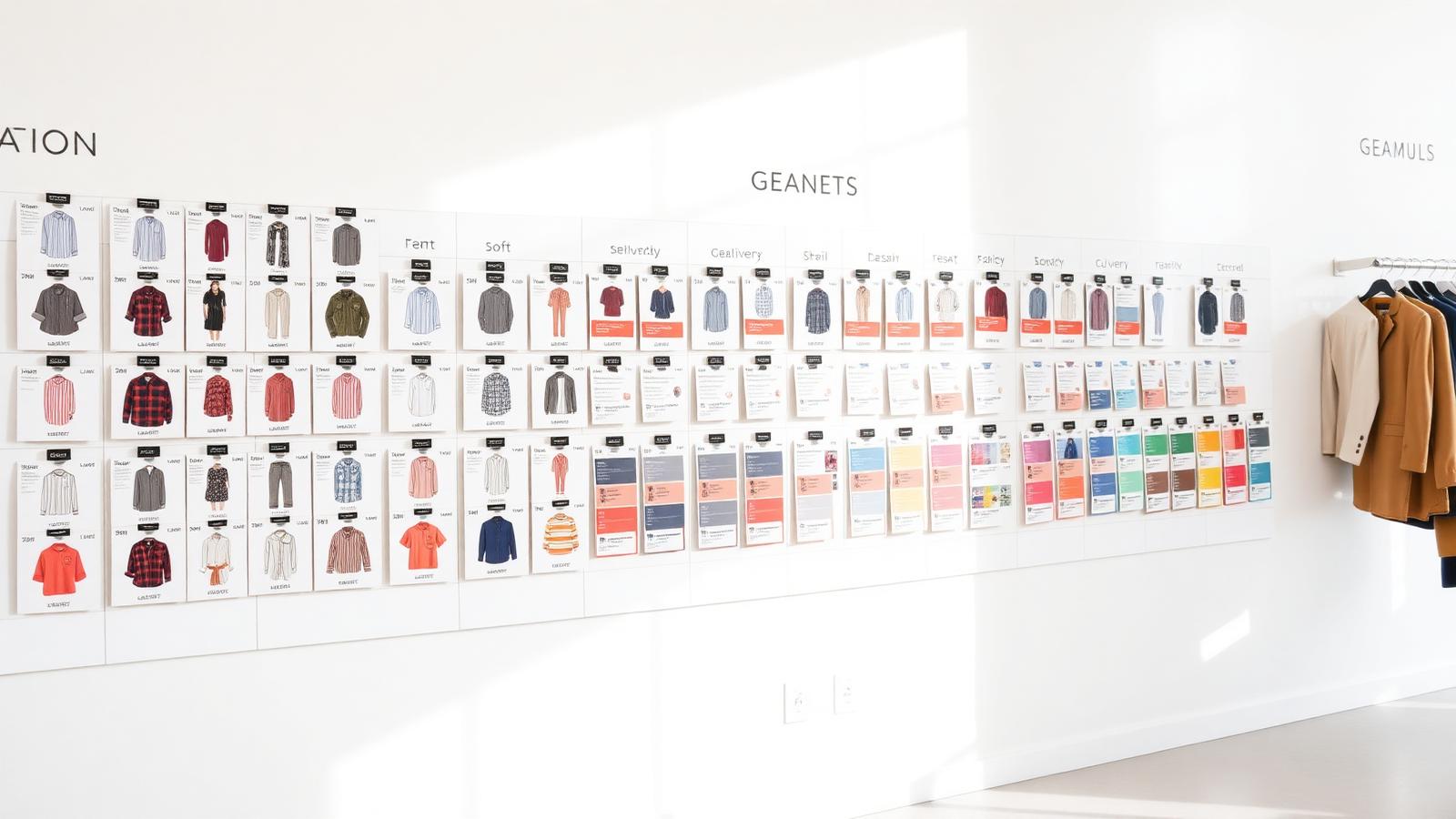
Your last drop sold through in three styles and sat in seven. You did not plan a bad collection. You planned without a calendar, a budget, and a way to see the whole season at once. Seasonal collection planning is how you fix that. It is the work you do before a single sketch becomes a sample, so the collection you ship matches the dates, the channels, and the money you actually have.
A season is not a mood. It is a deadline with a delivery window attached. This guide walks the full framework: what seasonal collection planning is, the fashion calendar that drives it, the stages from brief to buy, the decisions a human keeps, and how to run the whole thing on one canvas.
Table of Contents
- TL;DR: Seasonal collection planning in five lines
- What is seasonal collection planning?
- The fashion calendar that drives every season
- Why most seasonal plans fall apart
- The 7 stages of a seasonal collection plan
- What a seasonal plan should not decide for you
- Seasonal planning: the old way vs a connected way
- How to start: a practical first-season workflow
- Common seasonal planning mistakes and how to avoid them
- What to look for in a planning tool
- How seasonal planning affects your sell-through and cash
- How Kampana handles seasonal collection planning
- FAQ
- The bottom line
TL;DR: Seasonal collection planning in five lines
- Seasonal collection planning is the process of deciding what to design, in what quantity, at what price, and on what dates, for one selling season, before you commit to sampling and production.
- The fashion calendar runs about six months ahead of retail. Spring/Summer shows in September, Fall/Winter shows in February (FashionUnited).
- A good plan starts with dates and a budget, not with sketches. The line architecture and assortment come before the design.
- Plan for heroes, carryover, and newness in deliberate ratios. Do not let every style be a new style.
- Tools decide structure and surface tradeoffs. Humans decide the edit, the price, and what to cut. Map your plan to Kampana's line plan review workflow to keep it honest.
What is seasonal collection planning?
Seasonal collection planning is the merchandising work that turns a brand idea into a buyable, shippable assortment for one season. It answers four questions at once: what styles, how many, at what price, by what date.
It sits between concept and production. Concept gives you a direction. Production gives you garments. Planning is the bridge that makes sure the garments you produce are the ones the season, the budget, and the channel actually need.
A line plan is the document at the center of it. It is a structured list of every style in the season with its category, price, delivery, and role. Most brands either skip the line plan or write it after the design is done. Both are backwards. The plan should shape the design, not describe it after the fact.
The four pieces a seasonal plan always contains:
| Piece | The question it answers | Example |
|---|---|---|
| Line architecture | What categories and how many styles? | 6 tops, 4 bottoms, 2 dresses, 1 outerwear |
| Assortment | Which styles fill each slot? | A linen camp shirt fills "warm-weather woven top" |
| Budget | How much can we spend and earn? | Open-to-buy of $80k at cost, target margin 62% |
| Calendar | When does each style design, sample, and ship? | Hero outerwear samples by August, ships January |
If you can fill that table for your next season, you have a plan. If you cannot, you have a wish list. For the design direction that feeds it, see how to turn brand DNA into a collection concept.
The fashion calendar that drives every season
You cannot plan a season without the calendar that the rest of the industry runs on. The fashion calendar is roughly six months ahead of the weather. Collections are shown about half a year before they reach stores, so buyers can order and factories can produce (FashionUnited).
The two anchor seasons are Spring/Summer and Fall/Winter, with Resort and Pre-Fall added in between by many brands (Heuritech). The Council of Fashion Designers of America owns and runs the official Fashion Calendar and New York Fashion Week schedule, the reference timeline most American brands plan against (CFDA Fashion Calendar).
Here is the rhythm in plain terms.
| Season | Shows / market | Delivers to stores | You plan it |
|---|---|---|---|
| Spring/Summer | September | January to March | The prior spring |
| Fall/Winter | February | July to September | The prior fall |
| Resort / Cruise | June | November to December | Early in the prior year |
| Pre-Fall | December | May to June | The prior winter |
The lead times matter because they set every internal deadline. If Fall/Winter delivers in July, and production takes 90 to 120 days, your tech packs need to be done in spring. Which means design needs to be locked before that. Which means the plan needs to exist before any of it (ApparelMagic).
Plan backward from the delivery date, not forward from today. Every brand that ships late made the same mistake: they planned forward and ran out of runway.
Why most seasonal plans fall apart
The plans that fail rarely fail because the clothes were wrong. They fail for structural reasons that have nothing to do with taste.
The most common cause is overbuying. The industry builds overproduction into the model. The Ellen MacArthur Foundation estimates that around USD 500 billion of value is lost every year to clothing that is barely worn and never recycled (Ellen MacArthur Foundation). At the brand level that shows up as racks of markdowns and cash trapped in unsold units.
Four ways a seasonal plan breaks:
- No budget gate. The line grows style by style with no open-to-buy ceiling, so you sample more than you can fund.
- Newness for its own sake. Every style is new, so nothing carries over, and your whole season is a bet.
- Calendar drift. Design runs late, production compresses, and the collection ships into the back half of its selling window.
- No single source of truth. The plan lives in a spreadsheet, the designs in a folder, and the costs in someone's inbox. Nothing reconciles.
A season is not a bigger version of a drop. It is a portfolio. You plan it like one or you carry the risk like one.
The 7 stages of a seasonal collection plan
Here is the framework, start to finish. Each stage produces an output the next stage depends on. Run them in order.
Stage 1: Set the season brief and the dates
Start with the calendar, not the concept. Write down the delivery window, then work backward to fix the production deadline, the design-lock date, and the plan-lock date. Attach a one-paragraph brief: the season, the customer, the occasion, and the one thing this collection has to do.
Example: "Fall/Winter, our existing customer, layering for shoulder-season travel, the one job is a sellable outerwear hero under $300 retail." That sentence will end a hundred future arguments.
Stage 2: Build the line architecture
Decide the shape of the line before the styles. Set the number of categories and how many options sit in each. This is the skeleton.
A small brand might run 6 tops, 4 bottoms, 2 dresses, 2 outerwear, 1 accessory. The point is to commit to slots first, so design fills a need instead of inventing one. Too many slots and you dilute the buy. Too few and you give a wholesale buyer nothing to build a story from.
Stage 3: Plan the assortment and the budget
Now assign styles to slots and money to styles. Set an open-to-buy: the total you can spend at cost for the season. Give each style a target cost, a target retail, and a target margin. Add the units.
| Slot | Style | Target cost | Target retail | Units | Role |
|---|---|---|---|---|---|
| Outerwear 1 | Wool car coat | $95 | $295 | 300 | Hero |
| Top 1 | Silk camp shirt | $38 | $135 | 450 | Volume |
| Bottom 1 | Wide trouser | $42 | $145 | 400 | Volume |
| Dress 1 | Bias slip | $48 | $165 | 200 | Newness |
The budget gate is the whole point. When the total cost crosses your open-to-buy, something gets cut. Better to cut on a plan than to discover it in a warehouse. Kampana's line plan review workflow is built to surface exactly this kind of overage before you sample.
Stage 4: Pick heroes, carryover, and newness
Not every style plays the same role. A balanced season has three:
- Heroes. The few styles you build the campaign and the buy around. They get the deepest units and the best assets.
- Carryover. Proven styles you bring back, sometimes in a new color. They lower risk and cost less to develop. See how to refresh a carryover product without restarting design.
- Newness. The fresh bets that keep the brand moving. Real, but rationed.
A common starting ratio for a small brand is roughly 20% hero, 40% carryover, 40% newness. Adjust to your risk appetite, but decide the ratio on purpose.
Stage 5: Map the color and price story
A collection needs a color story that holds together and a price ladder that gives the customer somewhere to enter and somewhere to trade up.
Map every style to a small, shared palette. Three to five core colors plus a season accent is plenty for most small brands. Then lay the styles on a price ladder from entry to top. If everything sits at one price, you have a wall, not a ladder.
For the design side of the color story, see how to build a season's color story with an AI colorway generator.
Stage 6: Pressure-test against the calendar
Lay the plan back over the calendar from Stage 1. Walk each style: can it be designed, sampled, and produced in time for the delivery window? The hero outerwear with a 120-day lead time cannot start design in the same week as a simple jersey tee.
Flag anything that cannot make its date. Either pull its deadline forward or move it to the next season. This is where most late deliveries get prevented, on a plan, weeks before they would have happened in real life.
Stage 7: Lock the plan and brief production
Freeze the line. Hand each locked style to design and technical design with its brief, its target cost, and its date. A locked plan is what lets a technical design assist pack start with the right constraints instead of guessing.
From here, the plan stops being a planning document and becomes the spine of the season. Every asset, sample, and buy traces back to it.
What a seasonal plan should not decide for you
A framework gives you structure. It should not pretend to have taste.
AI and planning tools are good at the mechanical parts: holding the calendar, totaling the open-to-buy, flagging a style that blows the budget or misses its date, and showing the assortment as one view. They are not good at the editorial call.
The decisions a human keeps:
- The final edit. What stays and what gets cut when the budget says cut.
- The price. What the customer will actually pay, not what a margin formula prefers.
- The hero. Which style carries the season is a brand judgment, not a calculation.
- The brand line. Whether a style is "us." A model cannot feel that.
A plan that decides those for you is not planning. It is gambling with extra steps. Keep the human gate on the edit.
Seasonal planning: the old way vs a connected way
Most brands plan in disconnected tools. The plan lives one place, the designs another, the costs a third. The gap between them is where money leaks.
| Disconnected (spreadsheet + folders) | Connected (one canvas) | |
|---|---|---|
| Line plan | Static spreadsheet, out of date by week 2 | Live plan tied to the actual styles |
| Budget check | Manual, end of process | Continuous, flags overage early |
| Design link | Plan and design never reconcile | Each plan row links to its product |
| Calendar | Separate doc nobody updates | Plan, dates, and assets in one view |
| Approvals | Email threads | Approval gate per style |
| Carryover | Re-keyed every season | Reused from last season's nodes |
The connected approach does not replace your judgment. It removes the reconciliation tax so your judgment is the only thing you spend time on. Compare full workflows on the Kampana workflows hub.
How to start: a practical first-season workflow
You do not need a merchandising team to run this. You need one ordered pass.
- Fix the delivery window for the season you are planning, then back-plan the production, design, and plan-lock dates.
- Write the one-sentence brief. Season, customer, occasion, the one job.
- Draft the line architecture. Slots per category, before any styles.
- Set the open-to-buy and give every slot a target cost, retail, and unit count.
- Assign roles. Mark each style hero, carryover, or newness, and check the ratio.
- Map color and price across the line.
- Pressure-test the calendar and cut or move anything that cannot make its date.
- Lock it and brief design and production from the plan.
Run that once and you will never go back to a wish-list season. To do steps 3 through 8 on a shared canvas, start with the line plan review workflow.
Common seasonal planning mistakes and how to avoid them
Planning forward from today
The fix: plan backward from the delivery date. Put the ship window first and let it set every upstream deadline. Forward planning is how collections ship late (ApparelMagic).
Making everything new
The fix: protect a carryover ratio. Carryover lowers development cost and risk. A season that is 100% new is 100% bet. Bring proven styles forward and refresh them instead of rebuilding.
No budget gate
The fix: set the open-to-buy before the assortment and enforce it. When the plan crosses the ceiling, cut on paper. The alternative is cutting in markdowns.
Letting the plan drift from the product
The fix: keep the plan tied to the actual styles. When the line plan and the designs live in one place, the plan stays true. When they live apart, the plan is fiction by week two.
What to look for in a planning tool
If you are choosing software to run seasonal planning, judge it on whether it closes the gap between plan and product.
- Live line plan, not a static export. The plan should update as styles change.
- Budget visibility. Open-to-buy and margin should be visible while you build, not after.
- Calendar awareness. Delivery dates and lead times should sit in the same view.
- A link to the actual product. Each plan row should connect to its design, tech pack, and assets.
- Approval gates. A human signs off on the edit, the price, and the cut.
- Carryover reuse. Last season's work should be reusable, not re-keyed.
A tool that only makes a prettier spreadsheet has not helped. A tool that connects the plan to the product has. See how the pieces price out on Kampana pricing.
How seasonal planning affects your sell-through and cash
Planning is not paperwork. It is the lever on the two numbers that decide whether a season makes money: sell-through and trapped cash.
Sell-through improves when the assortment matches demand and the delivery hits the window. A hero that ships in month one of its season sells at full price. The same hero shipped late sells on markdown. The calendar is a margin decision disguised as a logistics one.
Trapped cash improves when you do not overbuy. Every unit you plan and do not need is cash sitting in a warehouse, and at industry scale that unsold inventory runs to hundreds of billions in lost value each year (Ellen MacArthur Foundation). At your scale it is the difference between funding the next season and financing it.
Plan the season as a portfolio and both numbers move in your favor. The plan is where the margin is won, long before the sale.
How Kampana handles seasonal collection planning
Kampana is an AI product creation OS for fashion brands. It turns one product into design, 3D renders, tech packs, PDP imagery, B2B sell-in kits, marketplace feeds, and social campaigns, on a node-based canvas with approval gates and product-fidelity QA. Seasonal planning is where it starts, because the plan is the spine everything else hangs on.
Instead of a spreadsheet that drifts from your designs, you build the season on one canvas where the plan and the products are the same objects.
What you get
- A live line plan tied to the actual styles, not a static export.
- Open-to-buy and margin visible while you build, with overage flagged early.
- A calendar view that holds delivery windows and lead times next to the plan.
- Role tagging for hero, carryover, and newness, with carryover reused from prior seasons.
- An approval gate per style, so a human signs off on the edit, the price, and the cut.
- A clean handoff from a locked plan into design and technical design assist packs.
The old way vs Kampana
| Old way | With Kampana | |
|---|---|---|
| Plan format | Spreadsheet, drifts in days | Live plan tied to products |
| Budget check | Manual, late | Continuous, flags overage |
| Plan-to-design | Two disconnected docs | One canvas, one source of truth |
| Calendar | Separate, unmaintained | In the same view as the plan |
| Carryover | Re-keyed each season | Reused as nodes |
| Approvals | Email threads | Approval gate per style |
How it works
- Open a season board and set the delivery window and dates.
- Build the line architecture as slots on the canvas.
- Add styles, target costs, retails, and units. Watch the open-to-buy total live.
- Tag heroes, carryover, and newness, and pull carryover from last season.
- Pressure-test against the calendar and approve the final edit at the gate.
- Hand locked styles to design, tech packs, and the rest of the end-to-end collection launch.
Pricing is credit-based. You draw from one shared credit pool, with no seats and no subscription, and credits do not expire. There is a free starter pack to plan your first season, and a line plan review draws a modest credit range because it is mostly structure and QA, not heavy render compute. See the current ranges on Kampana pricing.
A drop is not a post. A season is not a wish list. It is a portfolio with a deadline, and the plan is where you win or lose it.
FAQ
What is seasonal collection planning?
It is the merchandising process of deciding what styles to make, in what quantity, at what price, and on what dates, for a single selling season, before you commit to sampling and production. It produces a line plan that shapes the design instead of describing it afterward.
How far in advance should I plan a season?
Plan backward from your delivery window. The fashion calendar runs about six months ahead of retail, with Spring/Summer shown in September and Fall/Winter in February (FashionUnited). Add your production lead time, usually 90 to 120 days, to find when design and the plan must lock.
What is the difference between a line plan and a collection plan?
A collection plan is the broader season strategy: the brief, the story, the dates. A line plan is the structured document inside it that lists every style with its category, price, units, delivery, and role. The line plan is the operational core of the seasonal plan.
How many styles should a small brand plan per season?
There is no universal number, but most small brands are better served by a tight, well-edited line than a broad one. Decide the line architecture first, set an open-to-buy ceiling, and let the budget cap the count. A focused season is easier to fund, photograph, and sell.
What are the main fashion seasons?
The two anchors are Spring/Summer and Fall/Winter, with Resort and Pre-Fall added by many brands in between (Heuritech). The Council of Fashion Designers of America runs the official Fashion Calendar that most American brands plan against (CFDA Fashion Calendar).
How do I avoid overproducing?
Set an open-to-buy before you build the assortment, enforce it as a gate, and protect a carryover ratio so not every style is a new bet. Overproduction is a planning failure, not a sales one, and unsold inventory destroys hundreds of billions in value across the industry each year (Ellen MacArthur Foundation).
Can AI do seasonal collection planning for me?
AI can hold the calendar, total the budget, flag overages and date conflicts, and show the whole assortment as one view. It should not make the final edit, set the price, or pick the hero. Those are brand judgments, and Kampana keeps a human approval gate on each.
How does seasonal planning connect to the rest of production?
A locked plan becomes the brief for design, tech packs, PDP assets, and sell-in. On Kampana, the plan and the products are the same objects on one canvas, so a locked style flows straight into a technical design assist pack and on through the end-to-end launch.
The bottom line
Seasonal collection planning is the cheapest insurance in fashion. The plan costs a few days. A misplanned season costs a warehouse.
Start with the calendar and the budget, not the sketches. Build the line architecture before the styles. Balance heroes, carryover, and newness on purpose. Pressure-test every style against its delivery date. Then lock the plan and let it brief the season.
Do that and the collection you ship is the one the season actually needed. Ready to plan your next season on one canvas? Review your line plan with Kampana or start creating for free.
Send one product URL. Kampana turns it into a mini campaign pack.