Trend Forecasting for Fashion Brands with AI: What It Is and How to Use It (2026)
Trend forecasting for fashion brands with AI: how to read signals, separate macro from product trends, and turn a forecast into product you can ship on time.
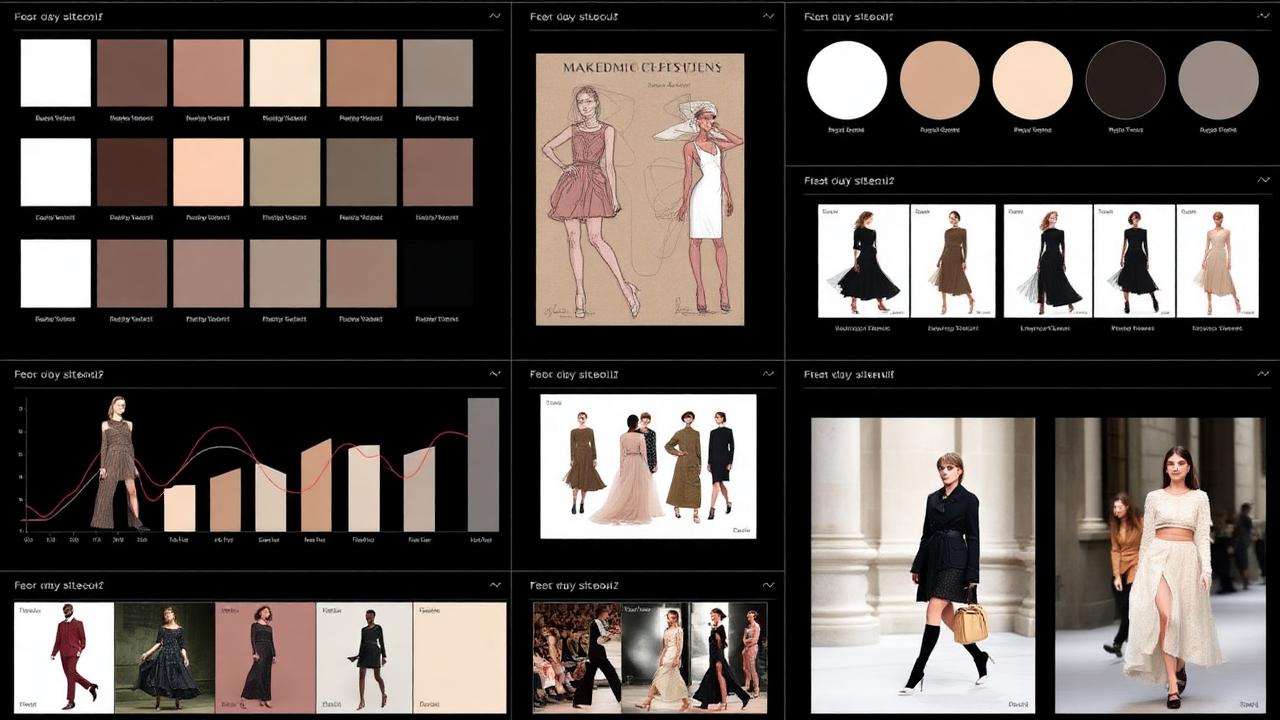
You read three trend reports, screenshot a runway, and bet a season on a hunch. Then the drop lands and the color was already everywhere, or three months too early.
Trend forecasting for fashion brands is meant to take the guesswork out of that bet. AI does not replace the call. It reads more signals than a person can, faster, so the call is informed. A trend you cannot turn into product on time is just a fact you read about later.
This guide covers what trend forecasting is, how AI changes it, how to run it for a small brand, and where a human still owns the decision.
Table of Contents
- TL;DR
- What is trend forecasting for fashion brands?
- Macro, consumer, and product trends
- How AI changes trend forecasting
- Why most brands get trend forecasting wrong
- The signals a forecast actually reads
- The 6 steps to run trend forecasting
- Trend forecasting vs trend chasing
- What AI should not decide about trends
- From a trend to a product on the canvas
- Common trend forecasting mistakes and fixes
- How forecasting affects your calendar and sell-through
- How Kampana turns a trend into product
- FAQ
- The bottom line
TL;DR
- Trend forecasting is the practice of predicting which colors, fabrics, and silhouettes will sell in a future season by reading cultural, consumer, and product signals.
- AI changes the scale, not the judgment. It reads far more signals and spots patterns earlier, but it does not decide what fits your brand.
- The trends that matter are the ones you can turn into product on your calendar. A late trend is a missed one.
- Separate macro trends (slow, cultural) from product trends (fast, specific). They move at different speeds and need different responses.
- Keep a human gate on which trends you act on. AI surfaces options. A person owns the bet.
What is trend forecasting for fashion brands?
Trend forecasting is the process of predicting future trends in clothing by analyzing colors, materials, and consumer behavior. It combines data analysis with cultural research to determine what styles will appeal to customers in upcoming seasons (WGSN).
For a fashion brand, the output is practical: a point of view on the colors, fabrics, and silhouettes worth building for a season, and a sense of timing. Reports usually look six months to a year ahead, sometimes further for color and macro themes (Wikipedia, fashion forecasting).
The point is not to predict the future perfectly. No one does. The point is to make a more informed bet than a hunch, and to act on it early enough to ship in season.
Macro, consumer, and product trends
"Trend" covers three very different things that move at different speeds. Mixing them up is a common mistake.
| Level | What it is | Speed | Example |
|---|---|---|---|
| Macro | Cultural and lifestyle shifts | Slow, years | A move toward durability and repair |
| Consumer | How shoppers behave and buy | Medium, seasons | More spend on versatile basics |
| Product | Specific colors, fabrics, shapes | Fast, weeks to a season | A particular silhouette or color spiking |
Forecasting agencies build their methodology across exactly these layers, from macro down to product (WGSN methodology). A small brand needs all three, but acts most on the product layer, because that is what becomes a drop.
How AI changes trend forecasting
AI does not invent a new kind of forecasting. It scales the part humans cannot do by hand: reading huge numbers of signals and finding patterns early.
Established forecasters now combine large numbers of data sources with machine learning and human analysts. WGSN, for example, describes tracking hundreds of millions of product listings daily across thousands of brands and retailers, and using image recognition on social signals, with experts layered on top (WGSN, AI and data). That is the shape of modern forecasting: machines for scale, people for judgment.
For a small brand, the same idea applies at a smaller scale. AI can watch search interest, social signals, and your own sales data, and flag what is rising before it is obvious. Free tools like search interest data are a real starting point (Google Trends).
The change is speed and breadth, not the decision. The brands that win read the signal early and then move on it. AI helps with the first half. The rest of this guide, and Kampana, is about the second half.
Why most brands get trend forecasting wrong
Forecasting fails in predictable ways, and almost none of them are about the data.
Three problems repeat:
- They read trends but cannot act in time. The report says "this color." The sampling and production cycle means the drop lands after the trend peaked.
- They chase instead of forecast. They copy what is already everywhere, which means they arrive late and undifferentiated.
- They confuse a macro trend with a product trend. They treat a slow cultural shift like a fast product spike, or the reverse, and time it wrong.
The result is a closet of "on-trend" product that did not sell because it was late, generic, or mistimed. The data was fine. The path from signal to product was broken.
The signals a forecast actually reads
A forecast is only as good as the signals under it. The useful ones fall into a few buckets.
- Cultural and media signals: what is shifting in lifestyle, media, and culture, which drives macro trends.
- Social signals: what is spreading on social platforms, often the earliest read on a product trend.
- Retail and product signals: what is launching, selling, and discounting across the market.
- Search signals: rising interest in colors, items, and styles (Google Trends).
- Color authorities: published color directions like a color of the year set a reference point (Pantone Color of the Year).
- Your own data: your sell-through, returns, and search, which tell you what your customer actually wants.
The last one is the most underused. A small brand's own data is often a better predictor of its next drop than any global report.
The 6 steps to run trend forecasting
1. Define the question
Decide what you are forecasting for: a specific category, a season, or a single drop. "What outerwear colors for fall" beats "what's trending."
2. Gather the signals
Pull from a mix: cultural and media, social, retail, search, and your own sales data. A balanced read beats one source (Google Trends).
3. Separate the layers
Sort what you find into macro, consumer, and product. A slow cultural shift and a fast color spike need different timing and different responses.
4. Filter for brand fit
Cut every trend that does not fit your brand. A trend that is real but not "you" is a distraction. This is a taste decision, not a data one.
5. Time it to your calendar
Map each trend you keep against your real production timeline. If you cannot ship it in season, it does not make the plan. Reading reports up to a year ahead exists precisely so you can hit timing (Business of Fashion).
6. Turn the trend into a concept
Convert the trends you kept into a collection concept: specific colors, fabrics, and silhouettes you can build. This is the step that separates forecasting from reading.
Trend forecasting vs trend chasing
These look similar and produce opposite results.
Trend chasing means reacting to what is already popular. By the time a trend is obvious enough to copy, the market is full of it, and you arrive late with the same thing as everyone else.
Trend forecasting means reading early signals and making a timed bet, so your product lands as the trend rises, not after it peaks. Forecasting is proactive. Chasing is reactive.
| Trend chasing | Trend forecasting | |
|---|---|---|
| Timing | After the peak | As the trend rises |
| Differentiation | Same as everyone | Your point of view |
| Signal used | What is already everywhere | Early, mixed signals |
| Result | Late and generic | On time and distinct |
The honest version: most fast-fashion volume is chasing, and it works on speed alone. A smaller brand cannot win on speed against that. It wins by forecasting and shipping a clear point of view on time.
What AI should not decide about trends
AI reads signals. It should not own the bet.
AI should not decide what fits your brand. It can surface a rising color, but whether that color is "you" is a brand call. It should not pick which trends you commit your budget to. And it should not confuse correlation in the data with a real, durable trend. A spike is not always a trend.
Forecasting is a bet with real money behind it. AI makes the bet more informed. A person still places it.
From a trend to a product on the canvas
A forecast that ends in a report is half a job. The value is in the product you ship from it.
The chain is: read the signal, pick the trends that fit and that you can time, turn them into a collection concept, then into product-accurate visuals you can sample, shoot, and sell. Each step should inherit the last, so the color and silhouette you forecast survive all the way to the PDP.
This is the job of the collection concept from brand DNA workflow: take your brand identity and a season's direction and turn it into a concrete concept. For the full method, see how to build a fashion collection concept with AI. When the concept is set, carry it into 3D assets to ecommerce and campaign renders and the ecommerce PDP asset pack.
Common trend forecasting mistakes and fixes
Reading trends you cannot ship in time
The fix: map every trend against your real production calendar before you commit. If it cannot land in season, drop it.
Chasing instead of forecasting
The fix: read early signals and make a timed bet, instead of copying what is already everywhere. Arrive as the trend rises.
Treating a spike as a trend
The fix: separate a short social spike from a durable shift. Confirm a product trend across more than one signal before betting on it.
Ignoring your own data
The fix: weight your own sell-through, returns, and search alongside outside reports. Your customer's behavior is the most relevant signal you have.
Forecasting without brand fit
The fix: filter every trend through your brand point of view. A real trend that is not "you" is still a distraction.
How forecasting affects your calendar and sell-through
Good forecasting shows up in two numbers: how fast you move and how well you sell.
On the calendar, a clear forecast lets you commit to colors and silhouettes early, so design and sampling do not stall waiting for direction. You hit drop dates instead of slipping them.
On sell-through, landing as a trend rises means full-price sales instead of markdowns on product that arrived late. Forecasting is, at its core, a margin tool. Right product, right time, fewer markdowns.
That is the business case. Forecasting is not about predicting the future. It is about timing your product to the market well enough to sell it at full price.
How Kampana turns a trend into product
Reading a trend is the easy part. Shipping product from it on time is the hard part, and it is where most brands stall. Kampana takes a direction and turns it into a collection concept and product-accurate visuals, on a node-based canvas with approval gates and product-fidelity QA.
Kampana is not a forecasting agency. It does not sell you the trend report. It closes the gap between the trend you chose and the product you ship.
What you get
- A collection concept built from your brand DNA and a season's direction.
- Specific colors, fabrics, and silhouettes you can sample and sell.
- Product-accurate visuals carried straight into PDP, feeds, and social.
- A tight chain from direction to product, so the forecast survives to the page.
- A human approval gate on the bet and the final direction.
The old way vs Kampana
| Old way | With Kampana | |
|---|---|---|
| After the forecast | A report on a desk | A concept on a canvas |
| Direction to product | Weeks of manual work | Wired into one flow |
| Consistency | Drifts at each handoff | Inherited at each step |
| Channels | Rebuilt per channel | One source, every channel |
| Who approves | Late, unclear | Human gate + product-fidelity QA |
How it works
- Drop your brand DNA and the season's direction on the canvas.
- Wire it to a collection concept: colors, fabrics, silhouettes.
- Approve the concept and direction.
- Carry it into product-accurate visuals for PDP, feeds, and social.
Pricing is credit-based: no seats, no subscription, a shared pool, and credits do not expire. Start with the free starter pack. Map your run to the collection concept from brand DNA workflow, then continue into the PDP asset pack and social campaigns. See credit pricing. For the whole drop, use the end-to-end fashion collection launch.
FAQ
What is trend forecasting in fashion?
It is the practice of predicting which colors, fabrics, and silhouettes will sell in a future season by analyzing cultural, consumer, and product signals. It combines data with cultural research, usually looking six months to a year ahead (WGSN).
How does AI help with fashion trend forecasting?
AI reads far more signals than a person can and spots patterns earlier, across social, retail, and search data. Leading forecasters pair machine learning with human analysts (WGSN, AI and data). AI scales the reading, but it does not make the brand decision.
Can a small brand do trend forecasting without an expensive subscription?
Yes. Start with free and low-cost signals like search interest, social, and your own sales data (Google Trends). Paid agency reports add depth, but your own data is often the most relevant signal you have.
What is the difference between trend forecasting and trend chasing?
Forecasting reads early signals and makes a timed bet so your product lands as a trend rises. Chasing copies what is already popular, which means arriving late and undifferentiated. One is proactive, the other reactive.
How far ahead should I forecast?
Product trends move in weeks to a season, while macro and color directions can be set a year or more ahead. Match your horizon to your production calendar so you can actually ship in time (Business of Fashion).
What should a human decide, not the AI?
Brand fit, which trends to commit budget to, and timing against your calendar. AI surfaces rising signals. A person owns the bet, because it is real money on a real season.
How do I avoid betting on a fad?
Confirm a product trend across more than one signal before committing, and separate a short social spike from a durable shift. If only one source shows it, treat it as a hint, not a plan.
How do I turn a trend into actual product?
Convert the trends you keep into a collection concept with specific colors, fabrics, and silhouettes, then into product-accurate visuals. A collection concept workflow does this, so the trend you chose survives to the product page.
The bottom line
Trend forecasting for fashion brands is not about predicting the future. It is about making a better-informed bet and timing your product to the market well enough to sell it at full price.
AI changes the scale of what you can read, not the judgment behind the bet. Read the signals, separate the layers, filter for brand fit, time it to your calendar, and turn the trends you keep into product. A trend you cannot ship on time is just something you read about. The brands that win turn the signal into a drop.
Send one product URL. Kampana turns it into a mini campaign pack.